Ooredoo Tunisia
Ooredoo Tunisia
About
Ooredoo Tunisia is one of three licensed mobile network operators competing in Tunisia’s mid-sized North African telecoms market. Operating under the Ooredoo brand — the commercial identity adopted across the Qatar-headquartered Ooredoo Group’s footprint from the Gulf to Southeast Asia — the operator positions itself as a technology-forward challenger, competing on network quality and data services in a market where mobile penetration has long exceeded 100 percent of the population.
The operator traces its origins to 2002, when the Tunisian government awarded a second GSM licence to Orascom Telecom, the Egyptian conglomerate then expanding aggressively across the Middle East and Africa. The network launched commercially under the Tunisiana brand and rapidly built a subscriber base that made it a credible rival to the incumbent, Tunisie Télécom. A series of ownership transactions followed as Orascom’s global assets were reorganised: Qatar Telecom (Qtel) acquired a controlling stake in Tunisiana in stages during the late 2000s and early 2010s, and the brand was formally redrawn as Ooredoo Tunisia in 2014, aligning the subsidiary with the group’s unified global identity adopted the previous year.
Today, Ooredoo Group — listed on the Qatar Stock Exchange and majority-owned by the Qatari state through the Qatar Investment Authority and related entities — retains controlling ownership of the Tunisian operation. No significant change in the ownership structure has been publicly confirmed as of early 2026.
Country market context
Tunisia’s mobile market is regulated by the Instance Nationale des Télécommunications (INT), which oversees a three-operator competitive landscape comprising state-controlled Tunisie Télécom, Ooredoo Tunisia, and Orange Tunisia (a subsidiary of the French Orange Group, which entered the market via a third licence awarded in 2009). Mobile penetration has consistently registered above 100 percent on a SIM-count basis, according to INT published data, reflecting multi-SIM usage and a relatively urbanised population of roughly 12 million. The market is considered mature in voice terms, with operators increasingly competing on 4G data quality, bundled offers, and enterprise services to sustain revenue growth. Tunisie Télécom, backed by the state, has historically held the largest subscriber share, though the gap between operators has narrowed over successive years. → Read the Tunisia expert briefing
Network and technology
Ooredoo Tunisia operates a multi-generation radio access network spanning 2G (GSM), 3G (UMTS/HSPA), and 4G (LTE) technologies. The operator has publicly stated coverage ambitions targeting the large majority of the Tunisian population with 4G service, with network rollout concentrated along the densely populated coastal corridor from Tunis to Sfax and in major inland governorates. Spectrum holdings include allocations in the 900 MHz, 1800 MHz, and 2100 MHz bands, with 4G LTE deployed across both 1800 MHz and, where licensed, lower-frequency bands that support rural propagation. The operator has invested in fibre backhaul to support capacity on its urban macro network, and as a subsidiary of a group with international gateway infrastructure across the region, it benefits from Ooredoo Group’s broader subsea cable participation. No commercial 5G licence or launch had been formally announced in Tunisia as of the time of writing, with INT yet to publish a confirmed 5G award timeline.
Products and services
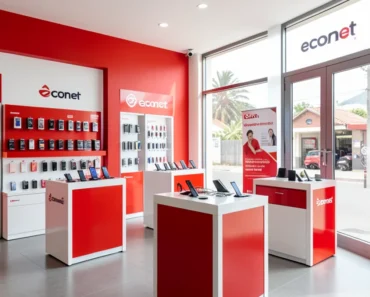
Ooredoo Tunisia’s retail portfolio spans prepaid and postpaid voice, SMS, and mobile data plans, with a growing emphasis on data-centric bundles targeting younger, smartphone-first consumers. The operator markets fixed 4G home broadband products — using LTE CPE devices — as an alternative to fixed-line DSL in underserved areas, a segment that has gained traction as fixed infrastructure remains uneven outside major cities. On the enterprise side, Ooredoo Tunisia offers dedicated connectivity, cloud-adjacent managed services, and M2M solutions targeting the country’s financial services, logistics, and public-sector verticals. The operator has promoted mobile financial services under its broader digital services strategy; however, Tunisia’s mobile money ecosystem remains less developed than in sub-Saharan African markets, constrained by regulatory frameworks governing the banking sector, and no standalone branded mobile wallet product with significant reported uptake has been independently confirmed for Ooredoo Tunisia as of early 2026.
Subscribers and market position
Ooredoo Tunisia occupies a position as one of the country’s two largest private mobile operators by subscriber base, competing closely with Orange Tunisia while trailing the state-backed incumbent Tunisie Télécom in overall SIM count, according to industry estimates and regulator trend data. The operator’s subscriber base skews toward urban and peri-urban demographics, with postpaid penetration — while growing — remaining modest relative to Western European benchmarks, consistent with the broader North African market pattern. Data ARPU trends are understood to be under pressure industry-wide as operators compete aggressively on bundle pricing.
Financial situation
Ooredoo Tunisia is not separately listed on any stock exchange; its financial results are consolidated into Ooredoo Group’s quarterly and annual reporting, which is published in accordance with Qatar Stock Exchange disclosure requirements. Group-level disclosures have indicated that the MENA region operations, taken together, have faced revenue headwinds from currency pressures and competitive pricing dynamics in several markets. Tunisia specifically has experienced macroeconomic stress — including foreign currency liquidity constraints and elevated inflation — that analysts note creates repatriation risk for multinational operators. The Tunisian dinar’s managed exchange rate and the country’s IMF programme discussions have been flagged in investor commentary as factors bearing on the subsidiary’s contribution to group financials. No restructuring, asset sale, or licence dispute involving the Tunisian operation has been publicly confirmed as of early 2026.
Recent developments
Over the 24 months to early 2026, Ooredoo Tunisia’s most notable activity has centred on continued 4G network densification and the expansion of its fixed-wireless broadband offer as household connectivity demand grows. The operator has participated in industry-level discussions facilitated by the INT regarding the eventual framework for 5G spectrum assignment in Tunisia, though no award process had formally opened. At the group level, Ooredoo has pursued strategic reviews of several of its operating companies — including a high-profile merger process in other markets — and analysts have periodically speculated about consolidation possibilities in the Tunisian three-player market, though no transaction has been announced. Ooredoo Tunisia has also refreshed its consumer brand communications and digital self-care platforms, consistent with group-wide digital transformation initiatives rolled out across Ooredoo subsidiaries. Tunisia’s broader economic environment, including ongoing fiscal adjustment and subdued consumer spending, has shaped the operator’s cautious near-term commercial posture.