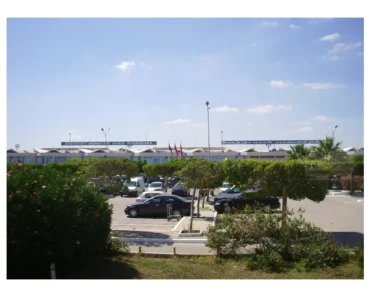
Malabo International Airport
Malabo International Airport
About
Malabo International Airport (IATA: SSG / ICAO: FGSL) serves as the principal air gateway to Equatorial Guinea and occupies a quietly strategic position in Central African aviation. Situated on Bioko Island in the Gulf of Guinea, the airport connects one of sub-Saharan Africa’s most oil-dependent economies to regional hubs across the continent and, through onward connections, to Europe and beyond. For a country whose land area and population are modest by continental standards, SSG punches above its weight as an entry point for energy-sector professionals, diplomats, journalists, and an emerging class of business travellers drawn by Equatorial Guinea’s hydrocarbon wealth.
The airport’s origins trace to the colonial era, when the facility served Spanish Guinea under a different operational mandate. Following independence in 1968, the infrastructure passed to national control and was progressively upgraded to accommodate jet traffic. The airport is owned by the Government of Equatorial Guinea and falls under the regulatory oversight of the Autoridad de Aviación Civil de Guinea Ecuatorial (AACGE). Operational management has at various points involved concession arrangements and technical partnerships, reflecting the government’s broader strategy of leveraging foreign expertise in infrastructure sectors.
Significant investment in the airport’s physical plant accompanied the oil boom of the late 1990s and 2000s. A modernised passenger terminal was developed to handle the sharp increase in business aviation and commercial traffic that followed the expansion of offshore oil and gas production. Further works have been carried out in subsequent years to improve apron capacity, navigation aids, and ground-handling infrastructure, though the airport remains classified as a medium-capacity facility by regional standards.
Country
Equatorial Guinea is a small Central African state comprising a mainland territory — Río Muni — and several islands in the Gulf of Guinea, of which Bioko is the largest and hosts the capital, Malabo. The country’s population is estimated in the low millions, making it one of the least populous nations on the African continent, yet it ranks among the highest in GDP per capita in sub-Saharan Africa owing to substantial offshore oil and gas revenues. Geographically, it borders Cameroon to the north and Gabon to the south and east on the mainland, positioning it within the Economic Community of Central African States (ECCAS) and the broader Central African franc zone. Despite its wealth on paper, development indicators remain uneven, a tension that shapes both the political environment and the infrastructure investment decisions that affect facilities like Malabo International Airport.
→ Read the Equatorial Guinea expert briefing
Airlines based here
The national carrier of Equatorial Guinea, CEIBA Intercontinental, uses Malabo International Airport as its primary hub and operational base. CEIBA has historically operated a mixed fleet on both regional African routes and longer-haul services to Europe, positioning itself as the flag carrier for a country whose government has consistently prioritised direct international connectivity. The airline’s network and fleet composition have evolved over the years in response to commercial pressures and fleet financing constraints, and travellers are advised to verify current schedules directly with the carrier.
Beyond CEIBA, Malabo International Airport is served by a number of visiting international carriers that treat SSG as a point-to-point or turnaround destination rather than a hub. Ethiopian Airlines, one of Africa’s largest and most network-extensive carriers, has maintained service to Malabo as part of its pan-African expansion strategy. Air France has historically provided connectivity to Paris Charles de Gaulle, reflecting the airport’s importance to the Francophone business and diplomatic community operating across Central Africa. Iberia, given Spain’s historical ties to Equatorial Guinea, has also featured in the airport’s international schedule at various points. Regional operators and charter carriers serving the energy sector — including those supporting offshore oil platform logistics — add further traffic, though these movements are not always reflected in published commercial schedules.
Flights and destinations
Malabo International Airport supports a network that spans continental African routes, intercontinental services to Europe, and shorter regional hops within Central and West Africa. The airport’s connectivity is shaped heavily by the demands of the oil and gas industry, which generates consistent demand for routes linking Malabo to energy-sector hubs and to European capitals where multinational operators are headquartered.
Representative destinations served from SSG include Addis Ababa (via Ethiopian Airlines, providing onward global connections), Paris Charles de Gaulle (historically via Air France), Madrid (reflecting the Spanish-language cultural corridor), Douala in Cameroon (a key regional hub and short-hop neighbour), Lagos in Nigeria (West Africa’s dominant commercial centre), Libreville in Gabon (a close Central African neighbour within the CEMAC zone), Bata (Equatorial Guinea’s mainland city, served on domestic routes), Accra in Ghana, and Casablanca in Morocco, which functions as a connecting hub for onward North African and European traffic. Intercontinental reach beyond Europe depends largely on connections made at major African hub airports rather than on direct long-haul services from SSG itself.
Facilities and capacity
Malabo International Airport operates with a single primary passenger terminal that handles both international and domestic departures and arrivals. The terminal was modernised during the oil-boom investment cycle and includes dedicated check-in facilities, immigration and customs processing halls, and a modest airside retail and hospitality offer. The airport is equipped with a single principal runway capable of accommodating wide-body jet aircraft, which has been essential for sustaining the intercontinental services that the airport’s commercial and diplomatic traffic requires. Instrument landing systems and navigational aids have been upgraded over successive improvement programmes, though the island geography and Gulf of Guinea weather patterns mean that operational conditions can be challenging.
Cargo facilities at SSG serve both commercial freight and the specialised logistics demands of the offshore energy sector. Ground-handling services are available, though the range of providers is more limited than at larger continental hubs. By regional classification, Malabo International Airport is best characterised as a small-to-medium hub: significant enough to sustain scheduled international jet services and flag-carrier operations, but without the throughput volumes or multi-terminal complexity of airports such as Addis Ababa Bole, Lagos Murtala Muhammed, or Nairobi Jomo Kenyatta. According to publicly disclosed traffic data where available, passenger volumes reflect the airport’s niche role serving a small national population augmented by a substantial expatriate and business-travel segment.
Visa regulations
Equatorial Guinea operates a relatively restrictive visa regime by African standards, and travellers arriving at Malabo International Airport should plan their documentation well in advance. Citizens of the United States, the United Kingdom, and European Union member states are generally required to obtain a visa prior to travel; visa-on-arrival availability has been limited and cannot be assumed without current official confirmation. Some regional African passport holders — particularly those from ECCAS member states — may benefit from simplified entry arrangements under bilateral or regional agreements, but this varies by nationality and is subject to change. An eVisa system has been discussed and partially implemented in recent years as part of broader efforts to facilitate business travel, but travellers should verify the current status of any electronic visa option before departure. Visa rules change frequently and the information above reflects general patterns rather than a live policy position.
→ For the most current entry requirements by passport nationality, use the live visa requirements lookup.
Recent developments
In the period leading into 2026, Malabo International Airport has seen a number of operationally significant developments. CEIBA Intercontinental has continued to adjust its network in response to fleet availability and commercial demand, with route announcements and suspensions reflecting the financial pressures common to smaller African flag carriers operating in a competitive post-pandemic environment. Ethiopian Airlines has remained one of the most consistent international operators at SSG, and its continued presence underlines the importance of Addis Ababa as a connecting hub for Equatorial Guinea’s international travellers.
Infrastructure works at the airport have continued under the Equatorial Guinea government’s broader national development agenda, with apron and terminal maintenance forming part of ongoing capital programmes. The government has also signalled interest in attracting additional international carriers to improve connectivity, a priority that aligns with wider economic diversification goals as oil revenues face long-term uncertainty. Regulatory engagement with ICAO and alignment with African Union aviation liberalisation frameworks — including the Single African Air Transport Market (SAATM) — has been an area of policy focus, though the pace of implementation across the region remains uneven. Industry observers note that improved connectivity from SSG would support both tourism development and the diversification of the economy beyond hydrocarbons.
News and reports
Ongoing operational and regulatory news relating to Malabo International Airport can be tracked through several authoritative channels. The Autoridad de Aviación Civil de Guinea Ecuatorial (AACGE) is the primary national regulatory body and the official source for policy announcements, safety directives, and licensing decisions affecting the airport and carriers operating within Equatorial Guinea’s airspace. IATA’s Africa and Middle East regional office publishes periodic reports on African aviation market trends, traffic data, and regulatory developments that contextualise SSG’s performance within the broader continental picture. The ICAO Western and Central Africa Regional Office (WACAF), based in Dakar, is the relevant ICAO body for safety oversight and standards implementation in the region and publishes audit findings and regional safety reports. For commercial route intelligence, aviation data providers and trade publications covering African aviation — including specialist outlets tracking African airline schedules and airport developments — are valuable secondary sources. Researchers and journalists are encouraged to cross-reference multiple sources given the variability of data availability for smaller African airports.
Related research
- Equatorial Guinea Expert Briefing
- Equatorial Guinea Statistics
- African Airports Directory
- African Airlines Directory
- Visa Requirements Lookup
- Country Comparison Tool