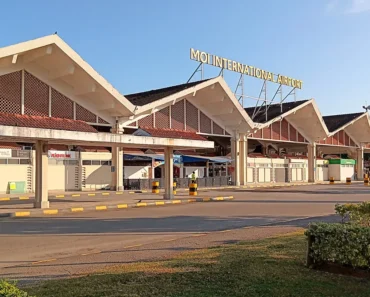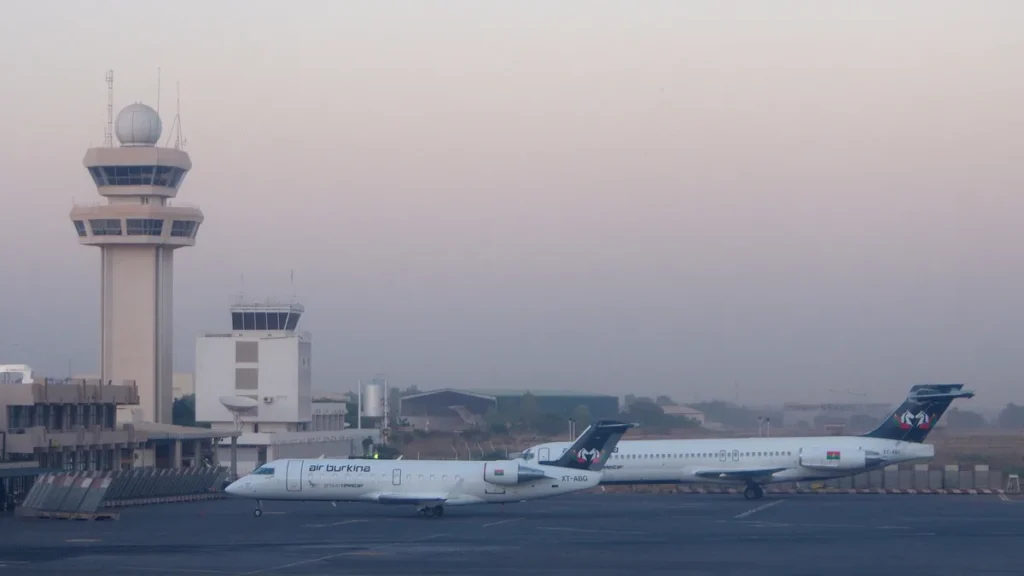
Ouagadougou Airport
Ouagadougou Airport
About
Ouagadougou Airport (IATA: OUA / ICAO: DFFD) serves as the principal international gateway to Burkina Faso and occupies a strategically important position in West African aviation. Situated within the capital city itself — an increasingly rare characteristic among African airports as urban growth presses against older airfields — OUA functions as the country’s primary hub for both commercial passenger traffic and cargo operations. For travellers crossing the Sahel, journalists covering one of the continent’s most closely watched political corridors, and aviation analysts tracking West African connectivity, Ouagadougou Airport is an essential reference point.
The airport traces its origins to the colonial-era infrastructure developed under French West Africa (Afrique Occidentale Française), with scheduled civil aviation activity at the site predating Burkina Faso’s independence in 1960. The facility was progressively formalised and expanded in the post-independence decades as Ouagadougou consolidated its role as a regional administrative and commercial centre. Ownership and operational oversight rest with the Burkinabè state, with the Agence Nationale de l’Aviation Civile (ANAC) serving as the civil aviation regulatory authority and the airport managed under government-linked structures that have at various points involved concession discussions with international operators.
Significant infrastructure investment was directed at the airport in the 2000s and 2010s, including terminal upgrades intended to improve passenger processing capacity and airside safety standards. The airport has historically been classified as a small-to-medium international hub by regional standards, handling a volume of traffic that reflects both Burkina Faso’s landlocked geography and the economic weight of Ouagadougou as a city of several million people and a hub for humanitarian, diplomatic, and commercial activity across the broader Sahel region.
Country
Burkina Faso is a landlocked nation in West Africa, bordered by Mali, Niger, Benin, Togo, Ghana, and Côte d’Ivoire. Its capital, Ouagadougou, is home to several million residents and functions as the political, economic, and cultural heart of a country whose total population is estimated in the range of 20 to 23 million people, according to recent demographic assessments. Burkina Faso occupies a pivotal geographic position in the Sahel, sharing borders with six countries and serving as a transit corridor for goods, people, and humanitarian operations across one of the world’s most complex security environments. The country’s aviation sector is consequently shaped not only by commercial demand but by the logistical requirements of international organisations, NGOs, and diplomatic missions operating throughout the region.
→ Read the Burkina Faso expert briefing
Airlines Based Here
Ouagadougou Airport does not currently host a large, fully capitalised national carrier in the traditional sense. Air Burkina, the country’s long-standing flag carrier, has operated scheduled services from OUA and has historically treated the airport as its home base, though the airline has faced significant operational and financial pressures in recent years that have affected its network and fleet. Visitors to the airport will find that the carrier landscape is dominated by regional African airlines and European operators using OUA as a spoke destination rather than a hub. Air France has maintained a long-standing connection between Paris Charles de Gaulle and Ouagadougou, reflecting the deep economic and diplomatic ties between France and its former territory. Ethiopian Airlines, one of the continent’s most expansive carriers, serves OUA as part of its pan-African network, providing onward connectivity through Addis Ababa Bole International Airport to destinations across Africa, Asia, and beyond. Royal Air Maroc connects Ouagadougou to Casablanca, offering travellers an alternative intercontinental routing via North Africa. Regional operators including Air Côte d’Ivoire and ASKY Airlines, the Lomé-based pan-African carrier, have provided connectivity to West and Central African cities, making OUA accessible within the sub-regional network.
Flights and Destinations
The route network at Ouagadougou Airport reflects the airport’s dual role as an international gateway and a regional connector. Intercontinental services link OUA primarily to Europe — Paris being the dominant long-haul destination — and to the Middle East and Asia via connecting hubs such as Addis Ababa and Casablanca. Within Africa, the airport supports connections to a range of capitals and commercial cities. Representative destinations served from OUA include Abidjan (Côte d’Ivoire), Accra (Ghana), Bamako (Mali), Dakar (Senegal), Lomé (Togo), Niamey (Niger), Cotonou (Benin), Addis Ababa (Ethiopia), Casablanca (Morocco), and Paris (France). The frequency and availability of these routes is subject to seasonal scheduling, airline commercial decisions, and the broader security and operational environment in the Sahel. Travellers and analysts should consult current airline schedules directly, as route suspensions and reinstatements have occurred with some regularity in recent years.
Facilities and Capacity
Ouagadougou Airport operates with a single passenger terminal that handles both international and domestic processing, a configuration common among West African airports of comparable size. The terminal has undergone phased renovation works over the years to improve check-in, immigration, and baggage handling infrastructure, though observers have noted that capacity constraints remain a consideration during peak periods. The airport is served by a single primary runway — designated 05/23 — which accommodates the wide-body and narrow-body aircraft types operated by the carriers currently serving OUA, including Boeing 737 and Airbus A320 family aircraft as well as larger wide-body types on long-haul services. Cargo facilities exist on site and are utilised by humanitarian and commercial freight operators, reflecting the airport’s importance as a logistics node for aid operations across the Sahel. By the classification standards used in African aviation analysis, OUA is generally considered a small-to-medium international airport. Publicly disclosed traffic data and industry estimates suggest annual passenger throughput that positions it below the continent’s major hubs but within a tier of regionally significant airports whose strategic importance exceeds their raw traffic volumes.
Visa Regulations
Travellers arriving at Ouagadougou Airport should be aware that Burkina Faso operates a visa regime that varies significantly by nationality. Citizens of ECOWAS member states generally benefit from freedom-of-movement provisions that facilitate entry without a standard tourist visa, reflecting the sub-regional integration framework. For travellers holding passports from the United States, the United Kingdom, and European Union member states, a visa is typically required prior to travel, and applicants have historically been directed to obtain documentation through Burkinabè diplomatic missions abroad. The availability and operational status of a visa-on-arrival facility or an eVisa system has varied over time and should be independently verified before travel, as policy changes can occur with limited advance notice. The security environment in Burkina Faso has also influenced entry requirements and travel advisories issued by multiple governments. Visa rules change — visit our live visa requirements lookup for the most current information before you travel.
Recent Developments
The past 24 months at Ouagadougou Airport have been shaped by the broader political and security context in Burkina Faso, which has experienced significant governmental transitions and an evolving security situation across much of the country’s territory. These factors have had direct consequences for the airport’s operations, including the suspension or reduction of certain international routes by carriers reassessing their risk exposure in the Sahel corridor. The departure of French military forces from Burkina Faso and associated diplomatic shifts have had implications for air traffic patterns, including the movement of military and charter aircraft that had previously contributed to activity at OUA. At the same time, carriers with established pan-African networks have continued to maintain services, and the airport has remained operational as the country’s primary international point of entry. Infrastructure discussions regarding longer-term capacity development have been reported in regional aviation and government communications, though the financing and timeline of any major expansion works remain subject to the country’s fiscal and political circumstances. Travellers and analysts are advised to monitor current airline and government advisories closely.
News and Reports
Ongoing operational and regulatory news relating to Ouagadougou Airport can be sourced from several authoritative channels. The Agence Nationale de l’Aviation Civile (ANAC) of Burkina Faso is the primary regulatory body and periodically issues official communications on airspace, safety, and airport matters. The airport authority itself releases operational notices through official government channels. At the continental level, the African Airlines Association (AFRAA) and IATA’s Africa regional office publish periodic reports on West African aviation trends, route development, and traffic data that contextualise OUA’s performance within the broader market. The International Civil Aviation Organization (ICAO) regional office for West and Central Africa (WACAF), based in Dakar, is a further authoritative source for safety oversight findings and regulatory developments affecting Burkinabè aviation. Regional aviation trade media, including outlets covering African aviation specifically, provide more frequent operational reporting. Researchers are encouraged to cross-reference multiple sources given the complexity of the operating environment.