Robert Gabriel Mugabe International Airport
Robert Gabriel Mugabe International Airport
About
Robert Gabriel Mugabe International Airport (IATA: HRE / ICAO: FVRG) is Zimbabwe’s principal international gateway and the busiest aviation hub in the country. Situated approximately 15 kilometres south-east of central Harare, it serves as the primary point of entry for the majority of international visitors, business travellers, diplomats, and cargo flows moving through Zimbabwe. Within the broader context of sub-Saharan African aviation, the airport occupies a strategically significant position on the north–south and east–west air corridors that connect southern Africa with East Africa, the Gulf, and Europe — making it a reference point for analysts tracking regional connectivity trends.
The airport’s origins trace to the colonial-era infrastructure developed during the Rhodesian period, with the facility operating under the name Salisbury Airport before Zimbabwean independence in 1980. Following independence it was redesignated Harare International Airport and underwent successive rounds of investment intended to bring it in line with growing post-independence traffic demand. The airport was formally renamed Robert Gabriel Mugabe International Airport in 2017, honouring the country’s founding president — a renaming that attracted both domestic support and international commentary at the time.
Ownership and operational oversight of the airport rests with the Civil Aviation Authority of Zimbabwe (CAAZ), the statutory body responsible for regulating and managing Zimbabwe’s civil aviation infrastructure. The airport has been the subject of recurring expansion discussions over the years, with proposals for terminal upgrades and runway rehabilitation surfacing at various intervals. Industry observers note that the pace of capital investment has historically been constrained by Zimbabwe’s broader macroeconomic environment, though renewed engagement with regional development finance institutions has kept modernisation ambitions on the policy agenda.
Country
Zimbabwe is a landlocked nation in southern Africa, bordered by Zambia to the north, Mozambique to the east, South Africa to the south, and Botswana and Namibia to the west. Harare, the capital, is the country’s largest city and its commercial and administrative centre. With a population estimated in the tens of millions and a resource base that includes significant agricultural land and mineral wealth, Zimbabwe holds a notable position within the Southern African Development Community (SADC) bloc, even as it continues to navigate a complex economic recovery. Its geographic centrality within the southern African region gives Harare Airport particular relevance as a transit and connection point for travellers moving between southern and eastern Africa.
→ Read the Zimbabwe expert briefing
Airlines based here
Air Zimbabwe, the national flag carrier, uses Robert Gabriel Mugabe International Airport as its primary hub and operational base. The airline has experienced a turbulent history marked by periods of suspension, fleet reduction, and restructuring, and its network — while limited compared to larger African carriers — connects Harare to a selection of regional and international destinations. Air Zimbabwe’s presence at HRE is central to the airport’s identity as a hub rather than merely a point-to-point facility.
Beyond the national carrier, a number of visiting international airlines operate scheduled services into Harare. Ethiopian Airlines, one of Africa’s largest and most consistently expanding carriers, maintains a Harare route as part of its extensive pan-African network, providing onward connectivity through Addis Ababa Bole International Airport to intercontinental destinations. Kenya Airways connects Harare to Nairobi’s Jomo Kenyatta International Airport, offering another major African hub connection. South African Airways and its low-cost affiliate Airlink (which operates independently under its own air operator certificate) serve the Harare–Johannesburg corridor, one of the busiest routes in the southern African market. Emirates has operated services linking Harare to Dubai, providing a critical intercontinental lifeline for business and diaspora travellers. Fastjet, the low-cost carrier with operations across eastern and southern Africa, has at various points served Harare as part of its regional network, though its schedule has been subject to commercial revision.
Flights and destinations
The route network supported by Robert Gabriel Mugabe International Airport spans regional African connections, continental trunk routes, and a limited but important set of intercontinental services. Within the southern African region, Johannesburg (O.R. Tambo International) represents the single most heavily trafficked corridor, reflecting deep economic and social ties between Zimbabwe and South Africa. Lusaka in Zambia and Lilongwe in Malawi are served as part of the airport’s regional connectivity, while Nairobi and Addis Ababa function as the primary onward hubs for passengers connecting to East Africa, the Middle East, Europe, and beyond.
Intercontinental services, while fewer in number than at larger African hubs, include the Dubai connection operated by Emirates, which provides access to the Gulf and onward to Asia and Australia. London has historically been served — directly or via hub connections — reflecting Zimbabwe’s Commonwealth ties and the size of the Zimbabwean diaspora in the United Kingdom. Other representative destinations in the network include Dar es Salaam, Maputo, Beira, Bulawayo (domestic), and Victoria Falls (domestic and charter), the latter being a critical tourism gateway that feeds visitors into the broader Harare network. Charter and seasonal services to leisure markets supplement the scheduled network, particularly in support of Zimbabwe’s wildlife tourism sector.
Facilities and capacity
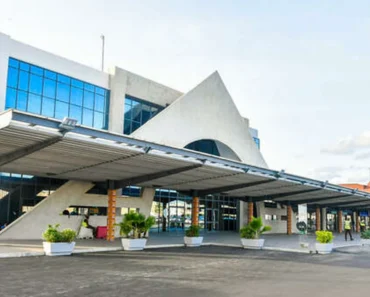
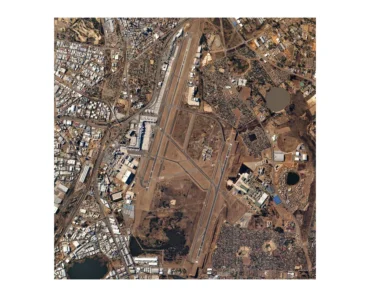
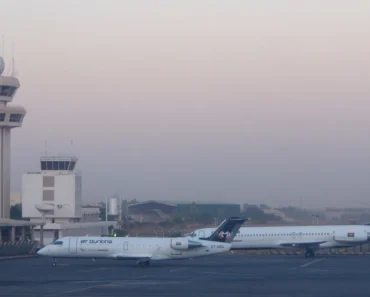
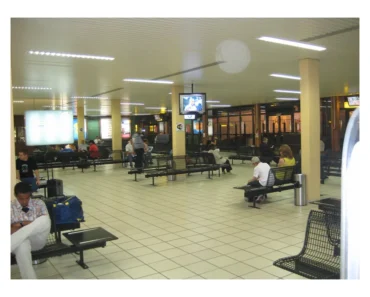
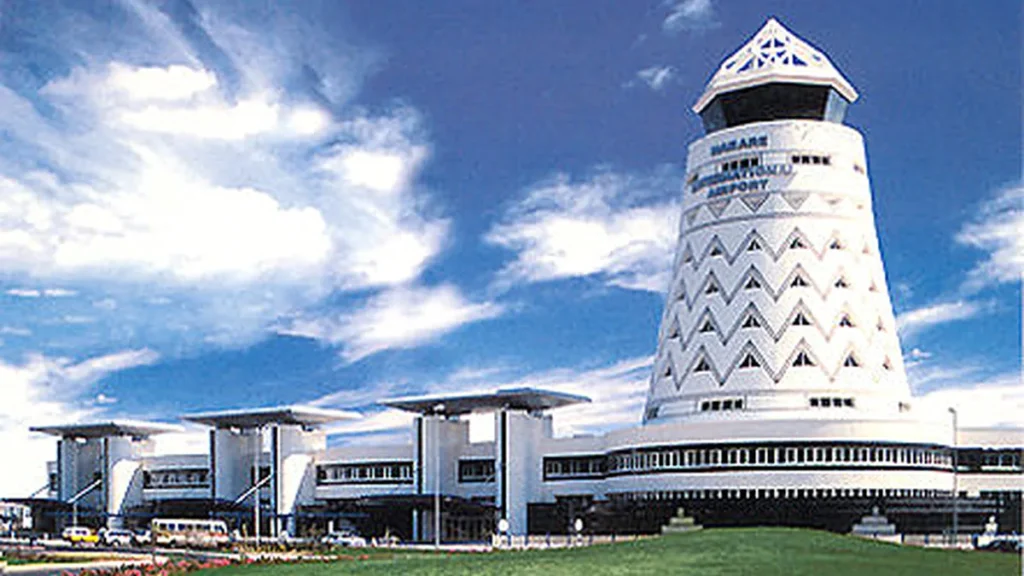
Robert Gabriel Mugabe International Airport operates with a single main terminal building that handles both international and domestic departures and arrivals, with segregated processing areas for each traffic type. The terminal infrastructure, while functional, has been widely characterised by aviation industry observers as ageing relative to the standards now common at peer airports across the region. The airport is served by two runways — the primary runway (designated 05/23) is of sufficient length to accommodate wide-body jet operations, including aircraft in the Boeing 767 and 777 class, which is relevant to its intercontinental service capability.
Cargo facilities exist on the airport campus and serve both belly-hold freight carried on passenger services and dedicated freighter movements, the latter being particularly important for Zimbabwe’s horticultural export sector. According to publicly disclosed traffic data and industry estimates, the airport falls into the medium-hub category by African standards — handling volumes that are meaningful at a national level but modest when set against the continent’s major hubs in Johannesburg, Cairo, Nairobi, Addis Ababa, and Casablanca. Planned expansion works, including proposals for terminal rehabilitation and apron expansion, have been discussed at the policy level, with the CAAZ periodically issuing statements on infrastructure development priorities.
Visa regulations
Travellers arriving at Robert Gabriel Mugabe International Airport are subject to Zimbabwe’s national visa regime, which has evolved in recent years as the government has sought to ease entry requirements in support of tourism and investment. Citizens of many regional African nations — particularly those within the SADC bloc — benefit from visa-free or visa-on-arrival arrangements. Travellers holding passports from the United States, the United Kingdom, and most European Union member states are generally eligible to obtain a visa on arrival at HRE, though fees, permitted durations of stay, and supporting documentation requirements apply. Zimbabwe also offers an eVisa system that allows eligible travellers to apply and pay online in advance of travel, which is advisable for those seeking to avoid queuing at the port of entry. The KAZA UniVisa, a joint arrangement between Zimbabwe and Zambia, is available to eligible visitors intending to travel between the two countries in the Victoria Falls region and can be obtained on arrival at Harare. Visa rules are subject to change without extended notice — travellers, journalists, and researchers are strongly advised to verify current requirements before travel.
→ Check the live visa requirements lookup for Zimbabwe
Recent developments
In the period spanning approximately 2024 to 2026, Robert Gabriel Mugabe International Airport has been the subject of several noteworthy developments. The CAAZ has continued to advance discussions around terminal modernisation, with renewed attention to improving passenger processing infrastructure, airside retail, and ground handling standards — areas that have drawn comment from visiting airline representatives and international aviation bodies. Air Zimbabwe has pursued a cautious fleet and network rebuilding strategy, with industry observers monitoring whether the carrier can sustain and expand its scheduled operations following earlier periods of severe disruption.
On the commercial aviation side, route development activity has reflected broader trends in African aviation, including increased interest from Gulf carriers and pan-African airlines in secondary southern African markets. Regulatory engagement between Zimbabwe and ICAO’s regional office has continued, with safety oversight and compliance remaining standing agenda items. The airport has also seen periodic discussions regarding public-private partnership models for infrastructure investment, a financing approach that has gained traction at several comparable African airports in recent years. Journalists and researchers tracking the airport should note that the pace of announced versus implemented change at HRE has historically varied, and independent verification of project timelines is advisable.
News and reports
Ongoing operational and regulatory news relating to Robert Gabriel Mugabe International Airport is available through several authoritative channels. The Civil Aviation Authority of Zimbabwe publishes press releases and regulatory notices through its official communications channels, and these represent the primary source for formal announcements regarding the airport’s operations, safety directives, and infrastructure plans. The Zimbabwe Tourism Authority periodically publishes data and commentary relevant to air access and visitor arrivals. At the continental level, IATA’s Africa and Middle East regional office produces reports and briefings on African aviation trends that contextualise Harare’s performance within the broader market. ICAO’s Eastern and Southern African Office (ESAF), based in Nairobi, is the relevant regional body for safety oversight and regulatory compliance reporting. Aviation trade publications including ch-aviation, Anna.Aero, and The Africa Report’s aviation coverage provide independent commercial analysis and route news. Researchers are advised to cross-reference multiple sources given the variable frequency of official disclosure from Zimbabwean aviation authorities.