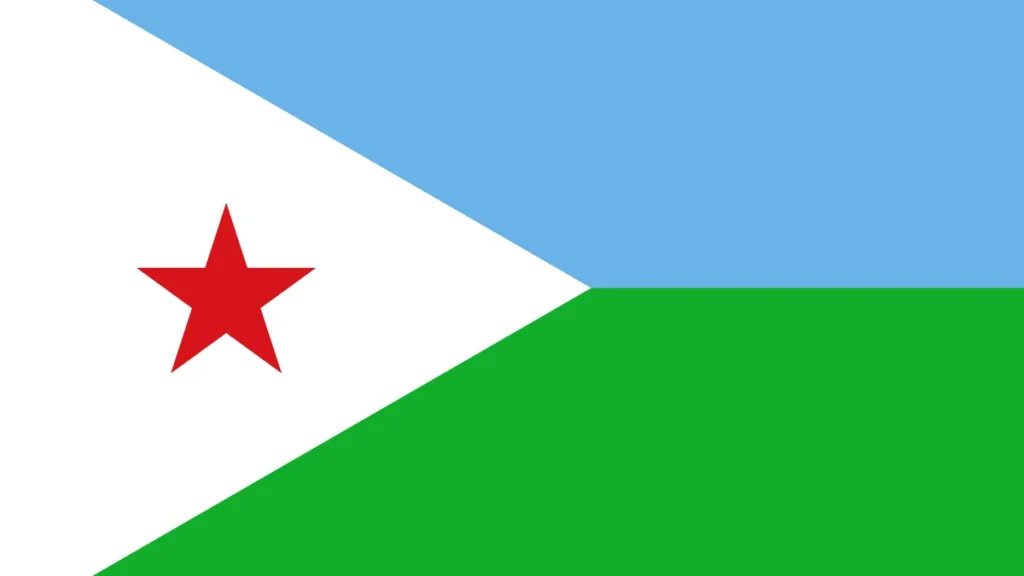
Djibouti — Expert Briefing
Djibouti at a glance: A micro-state of outsized strategic weight, Djibouti sits at one of the world’s busiest maritime chokepoints and has leveraged its geography into a model — and a cautionary tale — of port-led development in the Horn of Africa.
Overview
Capital: Djibouti City. Population: approximately 1.1 million (World Bank, 2024 estimate), with the vast majority concentrated in the capital. Official languages: French and Arabic, with Somali (Issa) and Afar widely spoken as first languages. Currency: Djiboutian franc (DJF), pegged to the US dollar at a fixed rate of 177.72 DJF per USD — a peg maintained since 1973 that anchors monetary policy and constrains independent fiscal manoeuvre. GDP per capita: approximately USD 3,400–3,600 (World Bank, 2024), placing Djibouti in the lower-middle-income band, though this figure masks extreme inequality between the urban commercial class and the rural and peri-urban poor. In 2026, Djibouti matters for two reasons that are difficult to overstate: it hosts more foreign military bases than any other country on earth — American, French, Chinese, Italian, Japanese, and others — making it a live laboratory for great-power competition on African soil; and it controls the principal land corridor through which landlocked Ethiopia, Africa’s second most populous nation, conducts the overwhelming share of its external trade. Any analyst tracking Red Sea security, Chinese infrastructure finance, or Horn of Africa geopolitics must pass through Djibouti.
Government and Politics
Djibouti is a presidential republic in constitutional form, though in practice power is highly centralised in the executive and competitive politics remain severely constrained. The head of state is President Ismail Omar Guelleh (universally known as IOG), who has governed since 1999 and whose People’s Rally for Progress (RPP) dominates all formal institutions. A 2010 constitutional amendment removed presidential term limits, enabling Guelleh — now in his fifth term following the April 2021 election, in which he secured approximately 97 percent of the vote amid an opposition boycott — to remain in office indefinitely. The legislature is the National Assembly (Assemblée nationale), a unicameral body of 65 seats elected for five-year terms; the ruling coalition holds all seats following opposition withdrawals and boycotts that have characterised elections since 2013. The next legislative elections are scheduled for 2028. There is no meaningful upper chamber, no independent judiciary in practice, and civil society space is tightly managed. The political succession question is the most sensitive domestic issue: Guelleh, born in 1947, has not publicly designated a successor, and the balance of power between the majority Issa-Somali community and the Afar minority — a tension that produced a low-level insurgency in the 1990s — remains a structural fault line beneath the surface stability. The government’s relationship with the Afar-led FRUD (Front for the Restoration of Unity and Democracy), formally demobilised under a 2001 peace agreement, is periodically tested by grievances over political marginalisation in the north and west of the country.
Economy
Djibouti’s GDP is estimated at approximately USD 4.0–4.3 billion (IMF, 2024–2025 projections), modest in absolute terms but growing at a rate of 6–7 percent annually in the years before the Red Sea crisis disrupted regional trade flows. The economy is almost entirely services-based: port operations, logistics, bunkering, and the leasing of military base facilities collectively account for the dominant share of government revenue and formal employment. The Doraleh Multipurpose Port, the Djibouti International Free Trade Zone (DIFTZ — billed as Africa’s largest free trade zone by area at launch), and the Addis Ababa–Djibouti Railway are the flagship infrastructure assets, all substantially financed and in significant part operated by Chinese state-linked entities. Key exports are re-exports and transit services rather than domestically produced goods; Djibouti has negligible agricultural or manufacturing output and imports the vast majority of its food. The debt position is the single most consequential economic story of the past 24 months. Djibouti’s external debt-to-GDP ratio has hovered above 70 percent, with China Exim Bank and other Chinese policy lenders holding the largest share — a concentration that the IMF has flagged as a source of debt distress risk. Negotiations over the terms of the Doraleh Container Terminal concession, from which the government controversially expelled DP World in 2018 and which remains subject to international arbitration proceedings, continue to cloud the investment climate and complicate Djibouti’s efforts to attract non-Chinese port operators and logistics capital. The Houthi campaign in the Red Sea, which intensified from late 2023 into 2025, has rerouted significant container traffic away from the Bab el-Mandeb strait, directly compressing transit revenues and testing the government’s fiscal buffers at a moment when debt servicing obligations remain heavy.
Demographics and Society
Djibouti’s population of approximately 1.1 million is among the most urbanised in sub-Saharan and East Africa: roughly 78 percent of residents live in Djibouti City and its immediate periphery, a proportion that continues to rise as climate stress and economic marginalisation drive internal migration from the interior. The two principal ethnic communities are the Issa (a Somali clan group, dominant in the south and in the capital) and the Afar (a distinct Cushitic people, predominant in the north and west and sharing cultural and kinship ties with communities across the border in Ethiopia’s Afar Region). A smaller Yemeni Arab community has historically played a significant role in commerce. Islam is the religion of approximately 94 percent of the population, practised predominantly in a Sunni Sufi tradition; the state is formally secular. The defining social trend of the current period is the refugee and migrant burden. Djibouti hosts one of the world’s highest per-capita concentrations of refugees and asylum seekers — primarily Somalis, Ethiopians, and Yemenis — managed through camps including Ali Addeh and Markazi. The country simultaneously serves as a transit corridor for tens of thousands of irregular migrants annually making the Gulf migration route from the Horn of Africa toward Yemen and Saudi Arabia, a movement associated with significant human rights abuses documented by the Mixed Migration Centre and UNHCR. This demographic pressure strains public services in a country that already imports virtually all of its food and faces acute water scarcity.
Key Issues Right Now
Red Sea security and transit revenue shock. The Houthi campaign targeting commercial shipping in the Red Sea and Gulf of Aden — which escalated sharply from late 2023 and continued through 2025 — has had a direct and measurable impact on Djibouti’s core revenue model. Shipping companies rerouting vessels around the Cape of Good Hope bypass the Bab el-Mandeb entirely, reducing the volume of traffic calling at Djiboutian ports for bunkering, transshipment, and onward rail connection to Ethiopia. The government has not published granular port revenue data, but IMF Article IV consultations and independent shipping analysts have noted the compression. The presence of the US-led Operation Prosperity Guardian naval coalition and the French and American bases in Djibouti City has made the country simultaneously a hub of the international response and a potential target of escalation — a dual exposure that the government navigates with characteristic diplomatic discretion.
Ethiopia’s landlocked dependency and political volatility. Ethiopia accounts for an estimated 90–95 percent of cargo transiting Djibouti’s ports, making the bilateral relationship the single most important variable in Djibouti’s economic outlook. Prime Minister Abiy Ahmed’s government has pursued an assertive strategy to diversify Ethiopia’s port access — including a controversial memorandum of understanding with Somaliland signed in January 2024 that would grant Ethiopia a Red Sea naval base and commercial port access in exchange for potential recognition of Somaliland’s independence. This agreement, which Somalia has vigorously rejected and which remains unimplemented, has introduced new uncertainty into the sub-regional order and prompted Djibouti to accelerate its own diplomatic engagement with Mogadishu and Addis Ababa simultaneously. Any material diversion of Ethiopian cargo to alternative corridors — whether through Berbera, Lamu, or a future Eritrean route — would be structurally damaging to Djibouti’s fiscal position.
Climate vulnerability and water stress. Djibouti is classified among the most water-scarce countries on earth, with renewable freshwater resources of under 500 cubic metres per capita annually. Recurrent drought cycles, intensified by climate change, have devastated pastoral livelihoods in the interior and accelerated rural-to-urban migration. The government has invested in desalination capacity — the Doraleh desalination plant, expanded with Gulf financing, is the primary urban water source — but coverage remains uneven and the energy cost of desalination is a persistent fiscal burden. Flooding events, paradoxically, have also increased in frequency and severity, with flash floods in 2019 and 2024 causing significant displacement and infrastructure damage in Djibouti City’s low-lying districts. Climate adaptation finance, including engagement with the Green Climate Fund, is a growing priority for the government, though institutional capacity to design and execute adaptation projects remains limited.
Travel and Connectivity
The principal international gateway is Djibouti-Ambouli International Airport, located approximately five kilometres from the city centre, served by regional carriers including Ethiopian Airlines, Air Arabia, and Fly Dubai, as well as the national carrier Djibouti Airlines. There are no other commercial airports of significance within the country. Djibouti City is the sole major urban centre; the towns of Ali Sabieh, Tadjourah, Obock, and Dikhil serve as regional administrative hubs but have limited visitor infrastructure. Tourism is a niche and growing sector, anchored by the country’s extraordinary natural assets: Lake Assal (the lowest point in Africa and one of the saltiest bodies of water on earth), the Ghoubbet marine area renowned for whale shark aggregations, and the dramatic volcanic landscapes of the Ardoukoba and Grand Bara. The government has invested modestly in ecotourism infrastructure, and visitor numbers — while small in absolute terms, estimated in the low tens of thousands annually — have grown. Internet penetration stands at approximately 65–70 percent (ITU, 2023–2024 estimates), relatively high for the sub-region and driven by Djibouti Telecom’s fibre and mobile broadband rollout; the country’s position as a submarine cable hub (multiple major cables including PEACE, EIG, and AAE-1 land here) gives it strategic digital infrastructure significance disproportionate to its size. Mobile money adoption is moderate relative to East African peers such as Kenya and Tanzania; Djibouti Telecom’s Waafi platform has expanded services, but cash remains dominant in informal transactions.
Further Research
Analysts and journalists seeking to deepen their understanding of Djibouti should begin with the following institutions and resources. The Central Bank of Djibouti (Banque Centrale de Djibouti) publishes monetary and financial stability data, including balance of payments and banking sector reports, and is the authoritative source on the dollar peg and reserve position. The Djibouti National Bureau of Statistics (Direction de la Statistique et des Études Démographiques, DISED) produces census data, household surveys, and national accounts, though publication schedules can be irregular. The World Bank Djibouti country page aggregates development indicators, project documentation, and the most accessible synthesis of poverty and infrastructure data. The IMF Djibouti country page, including Article IV consultation reports, provides the most rigorous publicly available analysis of fiscal sustainability, debt exposure, and growth projections. The Africa Center for Strategic Studies (a US Department of Defense academic institution) has published substantive analysis on Djibouti’s role in great-power competition, Chinese basing, and Horn of Africa security dynamics. Finally, the Mixed Migration Centre (MMC) — Horn of Africa is the leading source on migration flows through Djibouti, refugee conditions, and the Gulf migration corridor, with primary data collected in-country.