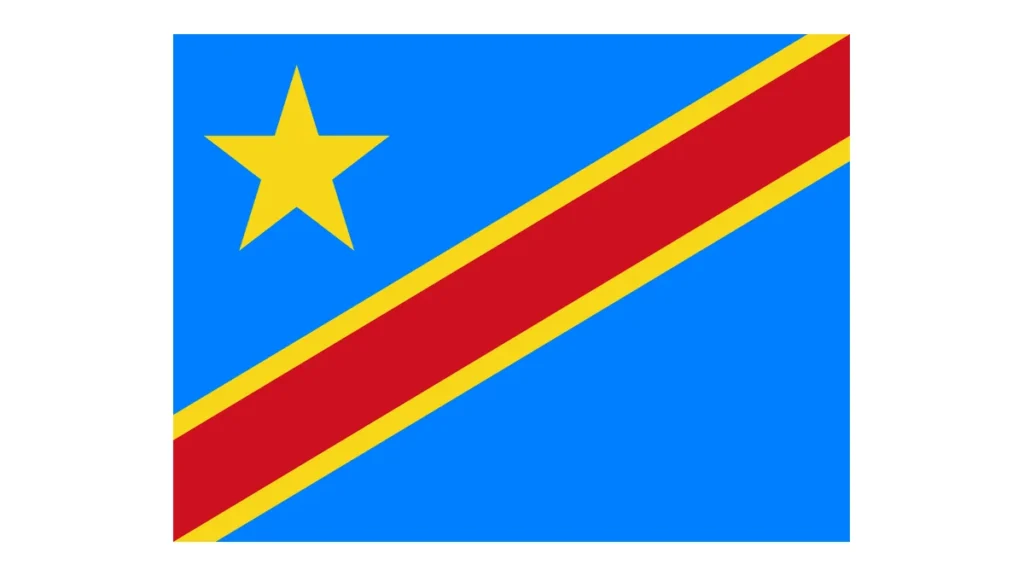
Democratic Republic of the Congo — Expert Briefing
Democratic Republic of the Congo at a glance: Africa’s second-largest country by area and one of its most resource-rich, the DRC remains simultaneously central to global clean-energy supply chains and to some of the continent’s most protracted humanitarian crises.
Overview
Capital: Kinshasa (also the country’s largest city, with an estimated metropolitan population exceeding 17 million). Official language: French, with Lingala, Swahili, Tshiluba and Kikongo recognised as national languages. Currency: Congolese franc (CDF). Population: approximately 107–110 million (UN Population Division, 2025 revision), making the DRC the fourth most populous country in Africa and the most populous Francophone country in the world. GDP per capita sits in the low-income band — estimated at roughly USD 600–650 at current prices — placing it consistently among the ten lowest in the world by nominal measure, even as aggregate GDP has grown. The DRC matters in 2026 for two compounding reasons: it holds an estimated 70 percent of the world’s known cobalt reserves and vast deposits of coltan, lithium and copper that are structurally indispensable to the global energy transition; and its eastern provinces remain the epicentre of one of the world’s largest and most undercovered displacement crises, with direct implications for regional stability across Central and East Africa.
Government and Politics
The DRC is a presidential republic. Executive power is concentrated in the presidency: the president serves as head of state, head of government and commander-in-chief of the armed forces (Forces Armées de la République Démocratique du Congo, FARDC). Félix Tshisekedi, leader of the Union pour la Démocratie et le Progrès Social (UDPS), was re-elected in December 2023 in a poll that international and domestic observers described as deeply flawed — marked by logistical failures, voter-roll irregularities and credible allegations of result manipulation — but which nonetheless secured him a second five-year term beginning in January 2024. The legislature is bicameral: the National Assembly (lower house, 500 seats) and the Senate (upper house, 109 seats), both renewed in the December 2023 cycle. Tshisekedi’s coalition, the Union Sacrée de la Nation, commands a working majority in the National Assembly. The next scheduled presidential and legislative elections are due in 2028. No formal constitutional amendments have been enacted since the 2006 constitution came into force, though proposals to revisit term limits and the electoral system surface periodically and remain politically contentious. The judiciary, including the Constitutional Court, is widely regarded by independent legal analysts as subject to executive influence. Provincial governance across the DRC’s 26 provinces is chronically under-resourced, and effective state authority in much of the east is contested or absent.
Economy
The DRC’s GDP is estimated at approximately USD 65–70 billion (current prices, 2024–25 World Bank and IMF estimates), with real growth running at around 6–7 percent annually — one of the higher rates in sub-Saharan Africa, though this headline figure masks extreme inequality and limited structural transformation. The economy is dominated by extractive industries: mining accounts for roughly 95 percent of export earnings. Copper and cobalt — extracted primarily in the Lualaba and Haut-Katanga provinces of the Copperbelt — are the defining exports, followed by coltan (used in capacitors for consumer electronics), gold, diamonds and cassiterite. Agriculture employs the majority of the population but contributes a declining share of formal GDP. The Congolese franc has faced persistent depreciation pressure; the Banque Centrale du Congo has intervened repeatedly to stabilise the exchange rate, with limited success, and dollarisation of the urban economy remains widespread. External debt stands at roughly 20–22 percent of GDP — manageable by regional standards — but debt-service capacity is constrained by narrow fiscal revenues. The single most consequential economic story of the past 24 months is the DRC government’s aggressive renegotiation and review of mining contracts, particularly those involving Chinese state-linked entities under the long-contested Sicomines infrastructure-for-minerals agreement. In 2024, an independent audit commissioned by Kinshasa concluded that the DRC had received a fraction of the infrastructure investment originally promised; the resulting diplomatic and commercial dispute with Beijing has reshaped the terms of engagement for all major mining investors and signalled a more assertive — if still fragile — resource nationalism.
Demographics and Society
With a total fertility rate estimated at around 6.0 births per woman, the DRC has one of the fastest-growing populations in the world; the UN projects the country could reach 200 million by mid-century. The population is overwhelmingly young: the median age is approximately 17 years. The DRC is home to more than 450 distinct ethnic groups; the largest clusters include the Mongo, Luba, Kongo and Mangbetu-Azande peoples, though no single group constitutes a national majority. Christianity is the dominant religion — practised by an estimated 95 percent of the population, split between Roman Catholicism, Protestantism and a significant Kimbanguist and Pentecostal presence — with Islam practised primarily in the east and northeast. Urbanisation is accelerating: approximately 48–50 percent of the population now lives in urban areas, up from around 30 percent two decades ago, and Kinshasa’s growth is among the fastest of any megacity globally. The defining social trend is the intersection of youth bulge and urban informality: a generation of young Congolese — educated to secondary level in growing numbers but facing formal unemployment rates that exceed 80 percent in urban centres — is navigating economic life almost entirely through the informal sector, mobile commerce and small-scale trade. This demographic pressure is simultaneously a source of social instability and, if channelled through investment in skills and infrastructure, a potential long-term economic asset.
Key Issues Right Now
The eastern conflict and the M23/Rwanda dimension. The security situation in North Kivu and South Kivu provinces has deteriorated sharply since late 2021 and reached a critical inflection point in early 2025, when the M23 rebel movement — widely documented by UN Group of Experts reports as receiving material support from Rwanda — captured Goma, the east’s largest city and humanitarian hub. The fall of Goma triggered mass displacement, the suspension of major humanitarian operations and a diplomatic rupture between Kinshasa and Kigali. Ceasefire negotiations, mediated through the East African Community and the Southern African Development Community (SADC) frameworks, have produced repeated agreements that have not held. The SADC Mission in the DRC (SAMIDRC) deployed troops in 2024 but suffered significant casualties. As of mid-2025, the conflict has displaced an estimated 7 million people in the east alone — the largest internal displacement crisis in Africa — and shows no credible path to resolution without sustained regional and international political engagement.
Critical minerals governance and the geopolitics of the energy transition. The DRC’s cobalt and copper deposits have made it a focal point of strategic competition between the United States, the European Union and China. Washington’s Lobito Corridor rail project — a USD 250 million-plus investment linking the Copperbelt to the Angolan port of Lobito — is explicitly framed as a counter to Chinese infrastructure influence. The EU’s Critical Raw Materials Act has accelerated European interest in securing supply agreements. For Kinshasa, the challenge is converting mineral wealth into domestic revenue and industrial value-addition rather than raw-material export: the government’s stated ambition to process cobalt domestically before export has met resistance from established trading structures. Artisanal and small-scale mining (ASM), which employs an estimated two million people and is associated with serious child labour and safety concerns, remains a governance challenge that intersects with international supply-chain due diligence requirements.
Humanitarian and public health fragility. The DRC carries a disproportionate share of global disease burden. It is the world’s largest mpox-affected country: the 2024 declaration of a public health emergency of international concern by the WHO was driven substantially by a new clade (Clade Ib) first identified in the DRC’s South Kivu province. Simultaneously, the country accounts for the majority of global cholera cases in years of elevated transmission, and measles outbreaks are endemic. The health system — chronically underfunded at less than USD 20 per capita in public health expenditure — is structurally unable to respond at scale. Conflict in the east has destroyed or rendered inaccessible a significant proportion of health facilities in affected provinces. Donor fatigue, combined with cuts to US foreign assistance announced in early 2025, has placed additional strain on the humanitarian architecture that has historically compensated for state incapacity.
Travel and Connectivity
The DRC’s principal international gateway is Aéroport International de N’Djili (also known as Kinshasa International Airport), which handles the majority of long-haul and regional traffic. Lubumbashi International Airport in the Copperbelt south serves the mining sector and connects to Johannesburg, Nairobi and regional hubs. Goma International Airport in North Kivu — historically a key entry point for humanitarian operations and regional business — has had its status severely disrupted by the 2025 conflict. Principal cities beyond Kinshasa include Lubumbashi (the commercial capital of the mining south), Mbuji-Mayi, Kananga, Kisangani and Bukavu. Tourism remains nascent and largely confined to specialist itineraries: Virunga National Park (mountain gorilla trekking, though access has been intermittently suspended due to security conditions), the Congo River, and the Okapi Wildlife Reserve are the headline attractions. The DRC is not a mass-market tourism destination and travellers should consult current government travel advisories — most Western governments maintain “do not travel” or “reconsider travel” advisories for eastern provinces. Internet penetration stands at approximately 25–30 percent of the population, heavily concentrated in Kinshasa and secondary urban centres. Mobile money adoption has grown rapidly: services including Airtel Money and M-Pesa (via Vodacom DRC) have expanded financial access in a country where formal banking penetration remains below 10 percent, and mobile money is increasingly central to informal trade and remittance flows.
Further Research
Analysts and journalists seeking to deepen their understanding of the DRC should consult the following institutions and resources. The Banque Centrale du Congo publishes monetary policy reports, exchange rate data and financial sector statistics. The Institut National de la Statistique (INS) of the DRC is the official source for demographic, economic and social data, including the most recent household survey findings. The UN Group of Experts on the DRC, which reports to the UN Security Council’s sanctions committee, produces the most rigorously documented open-source analysis of armed group financing, cross-border support networks and natural resource exploitation in the east; its reports are publicly available through the UN Digital Library. The Africa Center for Strategic Studies (a US Department of Defense academic institution) maintains a dedicated DRC security tracker and publishes accessible analytical pieces on the eastern conflict and regional dynamics. The World Bank DRC country page provides the most current macroeconomic data, project portfolios and poverty assessments. Finally, the Congo Research Group (Groupe d’Étude sur le Congo), based at New York University’s Center on International Cooperation, is the leading independent research unit focused specifically on Congolese politics, conflict and governance, and its publications are essential reading for anyone engaging seriously with the country.