Angola statistics — population, economy, trade and telecom
As Africa’s second-largest oil producer and one of the continent’s most resource-intensive economies, Angola occupies a strategically significant position in sub-Saharan Africa’s economic landscape. In 2026, with global energy markets in flux and the African Continental Free Trade Area (AfCFTA) reshaping regional trade flows, understanding Angola’s statistical baseline — its demographics, fiscal position, sectoral composition, and digital trajectory — is essential for investors, policymakers, and development practitioners operating across the continent.
Population and Demographics
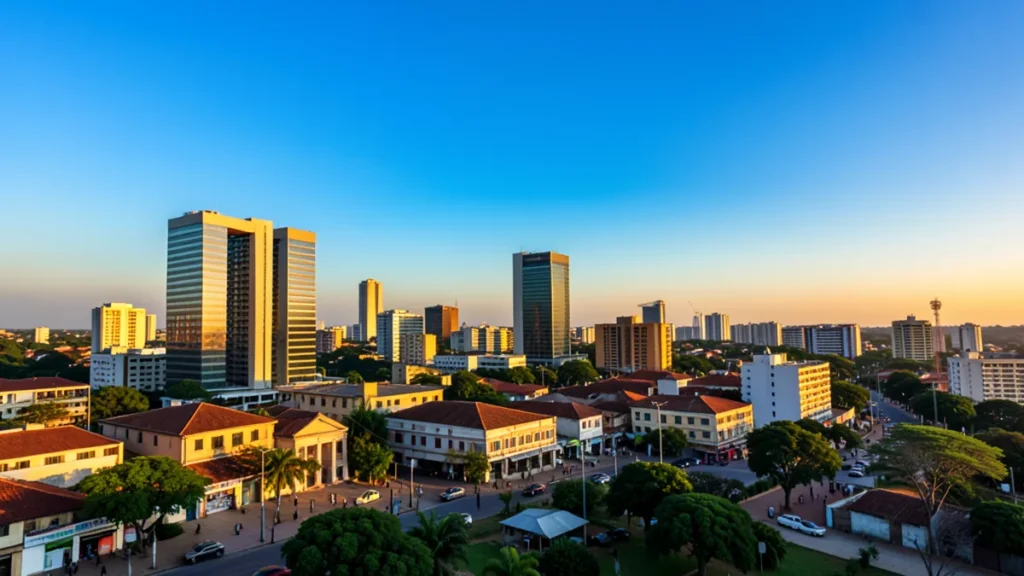
Angola’s population is estimated at approximately 37–38 million people as of 2025, making it one of the more populous nations in southern Africa. The United Nations projects continued strong growth, with annual population growth rates running at roughly 3.2–3.4%, among the higher rates globally. This demographic momentum is driven by persistently elevated fertility rates, with the total fertility rate estimated at approximately 5.4 births per woman. The median age sits at around 16–17 years, reflecting an exceptionally young population — a characteristic that simultaneously represents a long-term economic dividend and a near-term pressure on education, healthcare, and employment systems. Urbanisation has accelerated markedly over recent decades; World Bank estimates place Angola’s urban population share at roughly 68–70%, with Luanda — home to an estimated 9–10 million residents — functioning as the dominant economic and administrative hub. Secondary cities including Huambo, Benguela, and Lobito are growing but remain significantly smaller in economic weight.
Economic Indicators
Angola’s GDP is estimated by the IMF at approximately USD 84–92 billion in current prices for 2024, positioning it among the top ten largest economies on the African continent. GDP per capita stands at roughly USD 2,200–2,500 in nominal terms, though purchasing power parity (PPP) adjustments place this figure somewhat higher. Economic growth has been uneven: after a prolonged recession between 2016 and 2020 linked to the oil price collapse, Angola returned to modest positive growth, with the IMF projecting real GDP growth of approximately 3–4% for 2024–2025. Inflation has been a persistent structural challenge; consumer price inflation ran at elevated levels through 2023–2024, with estimates ranging from roughly 20–25% annually, driven in part by kwanza depreciation and import cost pass-through. The Angolan kwanza (AOA) has experienced significant devaluation pressure following the liberalisation of the exchange rate regime initiated under President João Lourenço’s reform agenda. Unemployment, particularly among youth, is estimated at roughly 30% or above by various labour market assessments, though informal employment absorbs a substantial share of the working-age population. Public debt-to-GDP is estimated by the IMF at approximately 60–70% of GDP, a level that has declined from crisis peaks but remains a focal point for fiscal management, particularly given Angola’s significant external debt obligations to Chinese creditors.
Trade and External Accounts
Angola’s trade profile is heavily concentrated. Crude oil and petroleum products account for roughly 90–95% of total export revenues, making the current account position acutely sensitive to global oil price movements. Angola is a member of OPEC and production capacity is estimated at approximately 1.1–1.2 million barrels per day, though actual output has faced operational challenges at ageing offshore fields. Diamonds represent the second most significant export commodity, with Angola ranking among the world’s top diamond producers by value; industry reports suggest diamond export revenues in the range of USD 1.5–2 billion annually. On the import side, Angola relies heavily on machinery and equipment, foodstuffs, vehicles, and manufactured consumer goods. China is Angola’s dominant trading partner — both as the primary destination for crude oil exports and as a major source of imports and infrastructure financing. Portugal, the United States, the United Arab Emirates, and India also feature prominently in Angola’s trade relationships. The current account balance fluctuates significantly with oil prices but has generally shown surpluses during periods of elevated crude prices.
Key Sectors
The hydrocarbon sector dominates Angola’s economy, contributing an estimated 30–35% of GDP directly and the vast majority of government revenues and foreign exchange earnings. The national oil company Sonangol remains central to sector governance, though the government has pursued reforms to attract international oil company investment, including from TotalEnergies, bp, ExxonMobil, and Eni. The mining sector, particularly diamond extraction through Endiama and its joint venture partners, is the second pillar of the extractive economy. Agriculture, despite engaging a large share of the rural population, contributes a relatively modest share of GDP — roughly 10–12% by World Bank estimates — reflecting low productivity and limited mechanisation. Angola has significant agricultural potential, particularly in the fertile highlands of Huambo and Bié provinces, and diversification into commercial agriculture is a stated government priority. The services sector, including retail, finance, and public administration, accounts for a growing share of economic activity, particularly in Luanda. Construction experienced a boom during the oil-revenue-fuelled years of the 2000s and early 2010s but has since contracted. Tourism remains underdeveloped relative to Angola’s natural and cultural assets, constrained by infrastructure gaps and visa accessibility, though the government has identified it as a medium-term diversification opportunity.
Telecommunications and Digital
Angola’s telecommunications sector has expanded considerably over the past decade. Mobile penetration is estimated at approximately 45–55% of the population, with total SIM subscriptions exceeding 20 million, though unique subscriber rates are lower due to multi-SIM usage. Internet penetration remains more limited, with ITU and industry estimates placing active internet users at roughly 30–40% of the population, with significant urban-rural disparities. The dominant mobile operator is Unitel, a privately held company that commands the majority of the market. The state-owned Angola Telecom operates fixed-line infrastructure and has expanded fibre capacity, while Movicel competes in the mobile segment. Mobile money adoption is growing but lags behind regional leaders such as Kenya or Ghana; Unitel Money and related services are expanding, supported by regulatory frameworks from the Banco Nacional de Angola. The government’s digital economy agenda, including investments in data centre infrastructure and e-government platforms, signals intent to accelerate digital transformation, though connectivity gaps — particularly in rural provinces — remain a structural constraint.
Sources and Methodology
This dashboard draws on data and projections from the World Bank’s World Development Indicators and Angola country pages, the International Monetary Fund’s World Economic Outlook and Article IV consultation reports, the United Nations Population Division’s World Population Prospects, the International Telecommunication Union (ITU) statistics database, the African Union’s statistical frameworks, and the Instituto Nacional de Estatística de Angola (INE). Where precise figures were uncertain or subject to revision, approximate ranges and qualifying language have been used in accordance with this publication’s editorial standards. Readers are encouraged to consult primary sources directly for the most current data releases, as Angola’s macroeconomic indicators are subject to revision as oil production data, exchange rate movements, and national accounts are updated. All figures referenced reflect the 2024–2025 data cycle unless otherwise indicated.
For deeper qualitative analysis of Angola’s political economy, investment climate, and strategic outlook, visit the Angola expert briefing. To compare Angola’s indicators with those of other African nations, explore all African country statistics on this platform. For broader context on macroeconomic trends shaping the continent, see our African economy pillar coverage.