Malawi — Expert Briefing
Malawi at a glance: A landlocked, aid-dependent democracy navigating acute economic stress, climate vulnerability, and a pivotal governance moment as it approaches a defining electoral cycle.
Overview
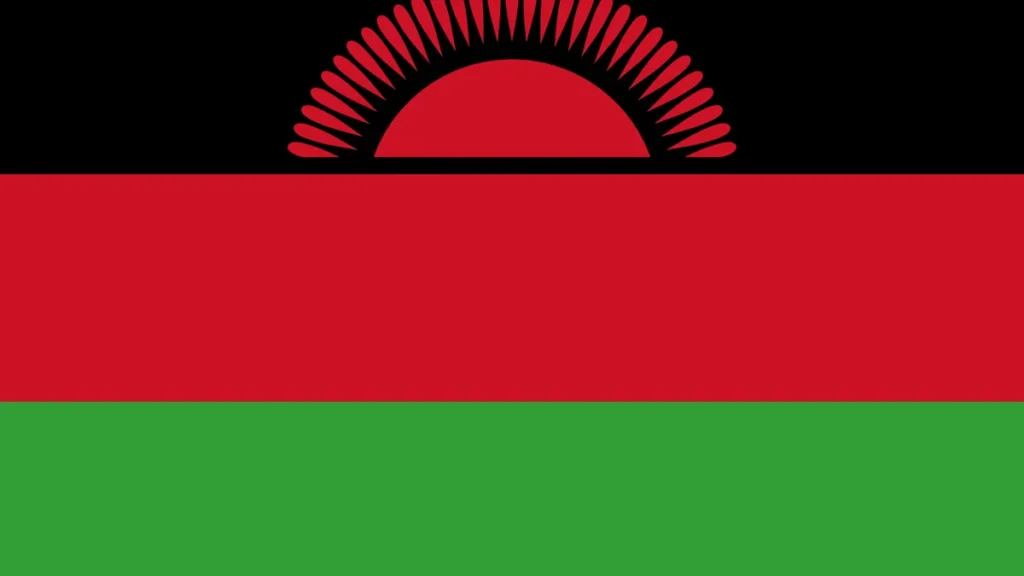
Malawi is a landlocked country in southeastern Africa, bordered by Tanzania to the north and northeast, Mozambique to the east, south, and southwest, and Zambia to the west. Its capital is Lilongwe, the seat of government and the largest city by administrative function, though Blantyre remains the commercial hub. The country’s population is estimated at approximately 21.5 million (World Bank, 2024 estimate), making it one of the most densely populated nations on the African continent relative to its land area. Official languages are English and Chichewa, with Chichewa serving as the dominant lingua franca across most of the country. The currency is the Malawian kwacha (MWK). GDP per capita sits in the low-income band, estimated at roughly USD 600–650 at current prices, placing Malawi consistently among the ten poorest economies in the world by this measure. In 2026, Malawi matters for two interconnected reasons: it is a stress-test case for democratic consolidation in sub-Saharan Africa — having achieved a landmark court-ordered presidential re-run in 2020 — and it is simultaneously one of the countries most exposed to the compounding effects of climate shocks, debt distress, and currency collapse, making it a critical reference point for debates about aid architecture, climate finance, and the limits of IMF-led adjustment programmes in fragile low-income states.
Government and Politics
Malawi is a presidential republic. Executive power is vested in a directly elected president who serves as both head of state and head of government, with a maximum of two five-year terms. The current president is Lazarus Chakwera, leader of the Malawi Congress Party (MCP), who came to power in June 2020 following a historic Constitutional Court ruling that annulled the May 2019 election on grounds of widespread irregularities — a ruling upheld by the Supreme Court of Appeal and widely regarded as a watershed moment for judicial independence in the region. Chakwera governs through the Tonse Alliance, a coalition of nine parties that has shown signs of internal strain since 2022. The legislature is the National Assembly, a unicameral body of 193 seats; members are elected by simple plurality in single-member constituencies. The most recent general elections were held in June 2025, covering both the presidency and the National Assembly. Those elections returned Chakwera to office in a closely contested result, though opposition parties — principally the Democratic Progressive Party (DPP) and the United Transformation Movement (UTM) — disputed aspects of the process and filed legal challenges that were ongoing as of early 2026. No significant constitutional amendments have been enacted since the 2020 cycle, though debate continues around proposals for a mixed-member proportional representation system and the potential introduction of a Senate, both of which have stalled in parliamentary committee. The Malawi Human Rights Commission and the Malawi Electoral Commission (MEC) remain the principal institutional watchdogs, though both face resource constraints and periodic accusations of executive influence.
Economy
Malawi’s GDP is estimated at approximately USD 13–14 billion in purchasing power parity terms, and roughly USD 12–13 billion in nominal terms (IMF World Economic Outlook projections, 2025). The economy is overwhelmingly agrarian: agriculture accounts for approximately 28–30 percent of GDP and employs an estimated 80 percent of the workforce, with smallholder farming dominant. Tobacco remains the single largest export earner, though its share of export revenue has declined as global demand contracts and as the government pursues — with limited success — a diversification agenda. Tea, sugar, and coffee are secondary agricultural exports. Uranium mining at Kayelekera has been intermittently significant but production has been inconsistent. The currency situation is the most consequential immediate economic story of the past 24 months. Following a managed devaluation of the kwacha in May 2023 — a condition attached to an IMF Extended Credit Facility — the currency lost approximately 44 percent of its official value against the US dollar in a single adjustment. This triggered a severe import cost shock, drove inflation above 35 percent at its peak, and eroded real wages across both the public and private sectors. Fuel and fertiliser shortages cascaded through the agricultural season, compounding food insecurity. The IMF programme, approved in November 2023, provided a framework for fiscal consolidation and debt restructuring, but implementation has been uneven, and Malawi’s external debt — a significant portion of which is owed to Chinese state-linked creditors — remains a structural constraint. Debt service obligations consume a disproportionate share of government revenue, limiting fiscal space for health, education, and infrastructure. Foreign exchange reserves have been critically low, at times falling below one month of import cover. The single most consequential economic story of the past 24 months is therefore the kwacha crisis and its downstream effects: a cost-of-living emergency that has deepened poverty, strained the Chakwera government’s political legitimacy, and forced a fundamental renegotiation of Malawi’s relationship with multilateral creditors.
Demographics and Society
Malawi has one of the youngest and fastest-growing populations in the world, with a median age estimated at approximately 17–18 years and a total fertility rate that, while declining, remains above 4.0 births per woman. Population density is high — over 180 people per square kilometre nationally — and is particularly acute in the Southern Region, which contains both the largest share of the population and the most degraded agricultural land. Urbanisation is accelerating but from a low base: approximately 18–20 percent of the population is classified as urban, with Lilongwe and Blantyre the principal urban centres, followed by Mzuzu in the north and Zomba in the south. The country is ethnically and linguistically diverse, with the Chewa the largest group, concentrated in the central region; the Lomwe, Yao, and Sena are significant in the south; and the Tumbuka and Ngoni predominant in the north. These regional and ethnic identities map, imperfectly but meaningfully, onto political affiliations and party support bases. Christianity is the majority religion, practised by approximately 77–80 percent of the population, with a significant Muslim minority — estimated at 13–15 percent — concentrated largely in the southern lakeshore districts and among the Yao community. The defining social trend of the current moment is the youth unemployment and underemployment crisis. With over 60 percent of the population under 25, and formal sector job creation negligible, a large and growing cohort of educated young Malawians faces a labour market that cannot absorb them. This is driving both internal rural-to-urban migration — straining urban services — and outward migration, particularly to South Africa and other regional destinations, with remittances becoming an increasingly important household income source.
Key Issues Right Now
Climate vulnerability and food security. Malawi is among the countries most acutely exposed to climate-related shocks in sub-Saharan Africa. Cyclone Freddy in February–March 2023 — the longest-lasting tropical cyclone ever recorded in the Southern Hemisphere — caused catastrophic flooding and landslides in the Southern Region, killing over 1,200 people, displacing hundreds of thousands, and destroying critical infrastructure and crops. Recovery has been slow and underfunded. In 2024 and into 2025, the El Niño-linked drought severely reduced maize harvests across the southern and central regions, triggering a food emergency that the World Food Programme estimated affected over four million people. The structural drivers — deforestation, soil degradation, dependence on rain-fed smallholder agriculture, and inadequate irrigation infrastructure — remain largely unaddressed. Climate finance pledged at COP forums has been slow to disburse, and Malawi’s capacity to absorb and deploy adaptation funding is constrained by weak public financial management systems.
Post-election political stability and governance credibility. The June 2025 elections and their contested aftermath have created a period of political uncertainty that is affecting investor confidence and donor relations. Legal challenges to the results, combined with tensions within the Tonse Alliance and a vocal and organised opposition, mean that the Chakwera government’s second term begins in a fragile political environment. Corruption allegations — including those that led to the dismissal of several cabinet ministers during the first term — continue to shadow the administration. Civil society organisations, including the Centre for Human Rights and Rehabilitation (CHRR) and the Malawi Human Rights Commission, have been active in monitoring both electoral conduct and governance standards, but face pressure and resource limitations. The credibility of state institutions, particularly the judiciary and the electoral commission, will be tested by how post-election disputes are handled.
The IMF programme and the cost-of-living crisis. Malawi’s engagement with the IMF under the Extended Credit Facility is the central economic policy story of 2025–2026. The programme requires fiscal consolidation — including subsidy reform, revenue mobilisation, and restraint on the wage bill — at precisely the moment when the cost-of-living crisis is most acute. Fuel prices, food prices, and utility costs have all risen sharply in kwacha terms. Public sector workers, including teachers and health workers, have staged strikes over real wage erosion. The government faces a classic adjustment dilemma: the conditionalities required to unlock balance-of-payments support are politically costly and socially painful, while the alternative — programme collapse — would likely trigger further currency depreciation and a deeper fiscal crisis. How Malawi navigates this tension over the next 18 months will be closely watched by other low-income countries in similar positions across the continent.
Travel and Connectivity
Malawi’s principal international gateway is Kamuzu International Airport in Lilongwe, which handles the majority of international traffic and has undergone phased expansion in recent years. Chileka International Airport in Blantyre serves as a secondary international and domestic hub. Regional connections are available to Nairobi, Johannesburg, Addis Ababa, and Dar es Salaam, among other hubs, though route availability is limited compared to larger regional economies and can be disrupted by airline commercial decisions. The country’s tourism profile centres on Lake Malawi — one of the African Great Lakes and a UNESCO World Heritage Site — which offers freshwater diving, sailing, and beach tourism of a character distinct from coastal East Africa. Wildlife tourism is anchored by Liwonde National Park, Majete Wildlife Reserve (where African Parks has achieved a notable conservation turnaround), and Nyika Plateau National Park in the north. Malawi markets itself as the “Warm Heart of Africa,” a brand that reflects genuine cultural hospitality and a relatively low-crime tourism environment compared to some regional neighbours. Internet penetration stands at approximately 20–25 percent of the population, with mobile internet the dominant access mode; fixed broadband infrastructure is limited and concentrated in urban centres. Mobile money adoption is significant and growing, with services such as Airtel Money and TNM Mpamba widely used for person-to-person transfers, bill payments, and increasingly for agricultural input purchases — a critical function in a predominantly rural economy. The mobile money ecosystem is considered one of the more developed in the region relative to GDP, and is a focus of financial inclusion policy under the Reserve Bank of Malawi’s National Financial Inclusion Strategy.
Further Research
Analysts, journalists, and investors seeking to deepen their understanding of Malawi should consult the following institutions and resources as primary starting points. The Reserve Bank of Malawi publishes monetary policy statements, financial stability reports, and balance-of-payments data that are essential for tracking the currency and macroeconomic situation. The Malawi National Statistical Office (NSO) — formerly the National Bureau of Statistics — is the authoritative source for population, poverty, and household survey data, including the Integrated Household Survey series. The World Bank Malawi country page aggregates development indicators, project documentation, and country economic memoranda, and is particularly useful for tracking aid flows and structural reform progress. The IMF Malawi country page provides Article IV consultation reports, programme review documents, and staff assessments that are indispensable for understanding the fiscal and debt situation. The Africa Center for Strategic Studies (based in Washington, D.C.) publishes security and governance analysis relevant to Malawi’s democratic trajectory and regional context. Finally, the Malawi Human Rights Commission and civil society organisations such as the Centre for Human Rights and Rehabilitation (CHRR) produce monitoring reports on elections, governance, and human rights that provide ground-level institutional perspectives not always captured in multilateral assessments.