Ecobank Transnational
Ecobank Transnational
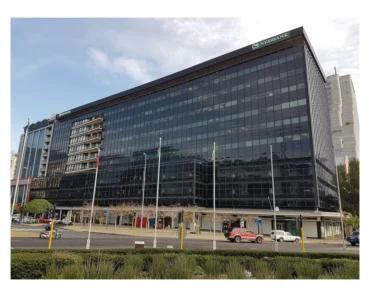
Ecobank Transnational Incorporated is the holding company behind Africa’s most geographically expansive banking group, operating across 33 countries on the continent and serving tens of millions of retail, corporate, and institutional customers. Headquartered in Lomé, Togo, it stands as a rare example of a genuinely pan-African financial institution built by Africans, for Africa.
About
Ecobank was founded in 1985 under the sponsorship of the Federation of West African Chambers of Commerce, with a founding vision to create a private, regionally integrated bank that could serve the fragmented economies of sub-Saharan Africa without dependence on foreign parent institutions. It opened its first branch in Lomé in 1988 and expanded rapidly through the 1990s and 2000s, entering Central, East, and Southern African markets in successive waves.
The group is majority-owned by a diverse shareholder base that includes the pan-African development finance institution Arise IIP, the South African financial group Nedbank (which holds a strategic stake acquired through a landmark 2014 partnership agreement), and a broad base of institutional and retail investors across West Africa. No single government controls the group, a structural feature that reinforces its pan-African, private-sector identity.
Ecobank Transnational Incorporated is listed on three African stock exchanges simultaneously: the Nigerian Exchange Group (NGX) in Lagos, the Bourse Régionale des Valeurs Mobilières (BRVM) in Abidjan, and the Ghana Stock Exchange (GSE) in Accra — a multi-listing that reflects both its West African roots and its ambition to deepen African capital market integration.
Sector and competitive position
Ecobank operates in the banking and financial services sector, competing across retail banking, corporate and investment banking, treasury, and digital financial services. Its defining competitive advantage is geographic reach: no other African-headquartered banking group maintains a physical presence across as many African countries. Its closest pan-African competitors include Standard Bank Group (South Africa), Absa Group (South Africa), and United Bank for Africa (Nigeria), all of which operate across multiple African markets but with narrower footprints. In francophone West and Central Africa in particular, Ecobank frequently holds a market-leading or top-three position, giving it structural advantages in corridors where competitors have limited presence. The group also competes with global banks such as Citibank and Standard Chartered in the corporate and institutional segment.
Operations and footprint
The group’s 33-country African network spans West Africa, Central Africa, East Africa, and Southern Africa, with its deepest roots in the ECOWAS region. Countries of operation include Nigeria, Ghana, Côte d’Ivoire, Senegal, Cameroon, Kenya, Tanzania, Uganda, Rwanda, Mozambique, and Zimbabwe, among many others. The group maintains hundreds of branches and thousands of ATMs continent-wide, complemented by a rapidly growing agent banking network that extends its reach into underserved rural and peri-urban communities. Ecobank employs tens of thousands of staff across its network, making it one of the largest private-sector employers in African financial services. Its regional business units — the Francophone West Africa cluster, the Anglophone West Africa cluster, Central, Eastern, and Southern Africa — each operate with a degree of local autonomy under the group’s unified brand and risk framework.
Products and brands
All customer-facing operations trade under the Ecobank brand, maintained as a single unified identity across all 33 markets — a deliberate strategy to build pan-African brand equity. The group’s retail offering includes current and savings accounts, consumer lending, mortgages, and remittances. Its flagship digital platform, the Ecobank Mobile App and the Ecobank Omni platform for corporate clients, enables cross-border payments and account management across multiple African currencies from a single interface. The Ecobank Xpress Account product targets unbanked and underbanked populations, requiring minimal documentation to open. On the corporate and investment banking side, the group offers trade finance, structured lending, cash management, and foreign exchange services, with particular strength in intra-African trade corridors. The Rapidtransfer service facilitates low-cost pan-African remittances, positioning Ecobank directly in the fast-growing digital payments space.
Financial situation
According to the group’s most recent annual report, Ecobank has delivered a sustained improvement in profitability over recent years, driven by net interest income growth, fee and commission income from digital channels, and disciplined cost management under its successive transformation programmes. The group has worked to reduce its non-performing loan ratio, which had been a concern in prior cycles, and industry analysts note that capital adequacy ratios have been maintained at levels compliant with Basel-aligned requirements across its key markets. Currency volatility — particularly sharp devaluations in Nigeria and other markets — has created translation headwinds on reported group financials, a recurring feature of operating across dozens of African currencies. The stock trades on the NGX, BRVM, and GSE; investors should consult current exchange data for live pricing and valuation multiples.
Recent developments
In the 24 months to mid-2026, Ecobank has focused on deepening its digital transformation rather than pursuing major geographic acquisitions, consolidating gains from its Ecobank Digital 2.0 initiative. The group has expanded its agency banking footprint significantly in Nigeria and Ghana, responding to central bank financial inclusion mandates in both markets. Regulatory engagement has intensified across several jurisdictions as African banking supervisors tighten capital and liquidity requirements in line with post-pandemic reform agendas. The group’s partnership with Nedbank has continued to generate cross-referral business in the Southern African corridor. Ecobank has also invested in upgrading its core banking infrastructure in several markets, a multi-year programme aimed at reducing operational risk and enabling faster product deployment. Leadership continuity at the group CEO level has provided strategic stability during a period of macroeconomic turbulence across the continent.
Outlook
Ecobank’s strategic priorities centre on monetising its unmatched geographic footprint through digital channels, growing fee-based income, and deepening financial inclusion across its markets. The rollout of the African Continental Free Trade Area (AfCFTA) framework represents a structural tailwind: as intra-African trade volumes grow, a bank with licensed operations in 33 countries is exceptionally well positioned to capture trade finance and payments flows. Key headwinds include persistent currency volatility in anchor markets such as Nigeria, sovereign debt stress in several sub-Saharan economies, and intensifying competition from mobile money operators and fintech challengers in the retail segment. The group’s ability to convert its physical network into a digital distribution advantage — rather than a cost burden — will be the defining strategic question of the next five years.
Related research
- Togo Expert Briefing — political economy, regulatory environment, and investment climate
- African Business Coverage — sector news, company profiles, and market analysis
- African Business Research — in-depth reports and data on leading African enterprises
- Country Comparison Tool — benchmark Togo and Ecobank’s key markets across economic and business indicators