Zambia statistics — population, economy, trade and telecom
As Africa navigates a complex post-pandemic economic landscape in 2026, Zambia occupies a strategically significant position at the intersection of southern and central Africa. A major copper producer, a country that completed a landmark debt restructuring process, and a nation with one of the continent’s youngest populations, Zambia’s statistical profile offers critical insight for investors, policymakers, and development partners tracking sub-Saharan Africa’s trajectory. The data below draws on the most recent available reference points from 2024 and 2025.
Population and Demographics
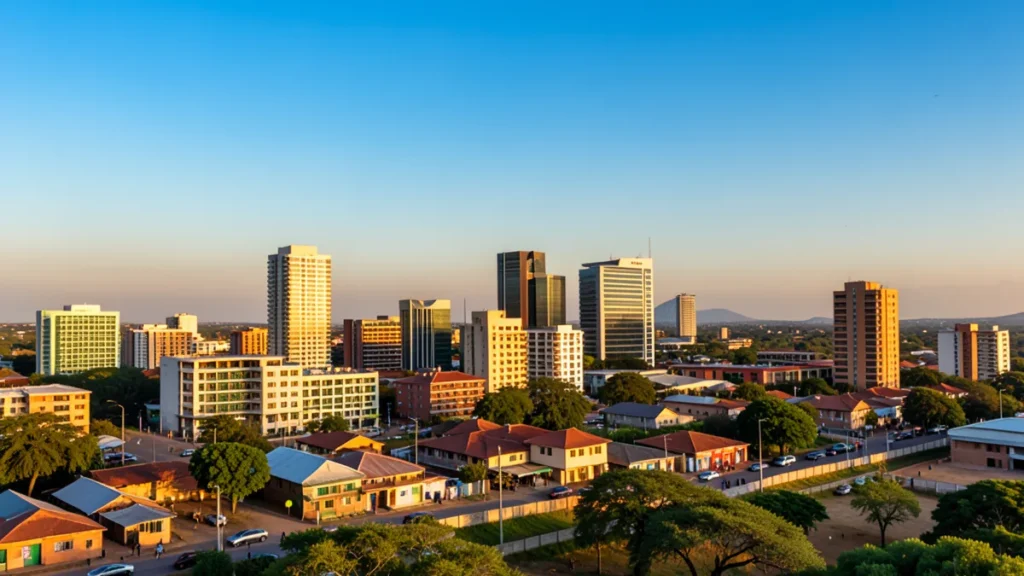
Zambia’s population is estimated at approximately 21 to 22 million people as of 2025, according to UN Population Division projections, making it a mid-sized African nation by headcount but one of the continent’s fastest-growing in proportional terms. The annual population growth rate is roughly 2.8 to 3 percent, placing sustained pressure on public services, infrastructure, and employment generation. The median age is exceptionally low — estimated at around 17 to 18 years — reflecting a demographic structure dominated by children and young adults. This youth bulge presents both a long-term economic dividend opportunity and an immediate governance challenge. Urbanisation is advancing steadily, with World Bank estimates suggesting that approximately 46 to 48 percent of Zambians now live in urban areas, concentrated heavily in the Copperbelt and Lusaka provinces. Lusaka itself is home to roughly 3.5 million people and continues to expand rapidly through both formal development and informal settlement growth.
Economic Indicators
Zambia’s GDP is estimated at approximately 28 to 30 billion USD in current prices for 2024 to 2025, according to IMF World Economic Outlook data, positioning it as a lower-middle-income economy. GDP per capita stands at roughly 1,300 to 1,500 USD at current exchange rates, though purchasing power parity adjustments place real living standards somewhat higher. GDP growth has been a mixed story: the economy expanded at an estimated 4 to 5 percent in 2024, supported by mining output and improved agricultural conditions, though drought linked to the El Niño weather pattern created significant headwinds in the 2023 to 2024 season. Inflation has been a persistent concern — the Zambia Statistics Agency reported headline inflation running in the range of 13 to 16 percent through much of 2024, driven by food prices, energy costs, and kwacha depreciation. The Zambian kwacha has faced sustained pressure against major currencies. Unemployment, particularly youth unemployment, remains structurally high, with informal sector employment accounting for the large majority of working Zambians. Zambia’s debt-to-GDP ratio had been among the most stressed on the continent following its 2020 Eurobond default; however, the country concluded a significant external debt restructuring agreement in 2023, and IMF programme support has helped stabilise the fiscal trajectory, with debt-to-GDP ratios projected to gradually decline from levels that had exceeded 100 percent of GDP at their peak.
Trade and External Accounts
Copper dominates Zambia’s export profile overwhelmingly, typically accounting for 70 percent or more of total merchandise export earnings. Cobalt, emeralds, and other gemstones represent secondary export categories of note. On the import side, Zambia relies heavily on refined petroleum products, machinery and equipment, vehicles, and manufactured consumer goods. Switzerland, China, the Democratic Republic of Congo, and South Africa consistently rank among Zambia’s most significant trading partners, with China playing an increasingly prominent role both as a destination for copper and as a source of capital goods and infrastructure financing. The current account has historically run a deficit, though fluctuations in copper prices on global commodity markets can shift this position materially. Industry reports and IMF programme documents suggest the current account deficit narrowed somewhat in 2024 as copper prices remained relatively firm on global markets, supported by demand linked to the global energy transition and electric vehicle supply chains.
Key Sectors
Mining is the undisputed anchor of the Zambian economy, with copper extraction centred on the Copperbelt province. Government ambitions to double copper production over the coming decade — to approximately 3 million metric tonnes annually — have attracted renewed interest from international mining companies, though energy supply constraints and infrastructure gaps remain significant obstacles. Agriculture employs the majority of Zambia’s rural population and contributes roughly 5 to 8 percent of GDP in formal terms, though its role in household food security and informal livelihoods is far larger. Maize is the dominant staple crop. The 2023 to 2024 El Niño drought severely reduced harvests and triggered a national food emergency declaration. Services, including retail, finance, and public administration, account for the largest share of formal GDP at roughly 50 to 55 percent. Tourism, centred on Victoria Falls, South Luangwa National Park, and the Lower Zambezi, contributes modestly to GDP and foreign exchange earnings but holds significant untapped potential. The manufacturing sector remains underdeveloped relative to regional peers, though agro-processing and construction materials represent areas of incremental growth.
Telecommunications and Digital
Zambia’s telecommunications sector has expanded considerably over the past decade, though coverage gaps in rural areas persist. Mobile penetration is estimated at approximately 55 to 65 percent of the population based on active SIM subscriptions, according to ITU and industry operator data. Internet penetration remains lower, with World Bank and ITU estimates suggesting that roughly 30 to 40 percent of Zambians had access to the internet in some form as of 2024, with mobile broadband representing the primary access pathway. The dominant mobile network operators are Airtel Zambia and MTN Zambia, which together account for the large majority of the subscriber base. Zamtel, the state-owned operator, holds a smaller market share. Mobile money services have grown substantially, with platforms such as Airtel Money and MTN Mobile Money facilitating financial inclusion for populations without traditional bank accounts. The Zambian government has identified digital infrastructure as a development priority, and fibre backbone expansion projects have been progressing with support from development finance institutions.
Sources and Methodology
The data and estimates presented in this dashboard draw on a range of authoritative sources including the World Bank World Development Indicators database, IMF World Economic Outlook and Article IV consultation reports, UN Population Division projections, the Zambia Statistics Agency (ZamStats), the Bank of Zambia, the International Telecommunication Union (ITU), the African Development Bank, and the African Union. Where precise figures were not available with certainty for the 2024 to 2025 reference period, qualifying language such as “approximately,” “roughly,” and “estimates suggest” has been used deliberately to reflect data uncertainty rather than present false precision. Readers requiring exact official figures for research or investment purposes are encouraged to consult primary source databases directly, as statistics are subject to revision.
For deeper qualitative and strategic analysis of Zambia’s political economy, investment climate, and sectoral opportunities, visit our Zambia expert briefing. To compare Zambia’s indicators with those of other African nations, explore our full library of all African country statistics. For broader context on macroeconomic trends shaping the continent, see our African economy pillar coverage.