Somalia — Expert Briefing
Somalia at a glance: A federal republic rebuilding state institutions amid persistent insurgency, climate shocks, and a strategically vital coastline that places it at the centre of Red Sea and Indian Ocean geopolitics in 2026.
Overview
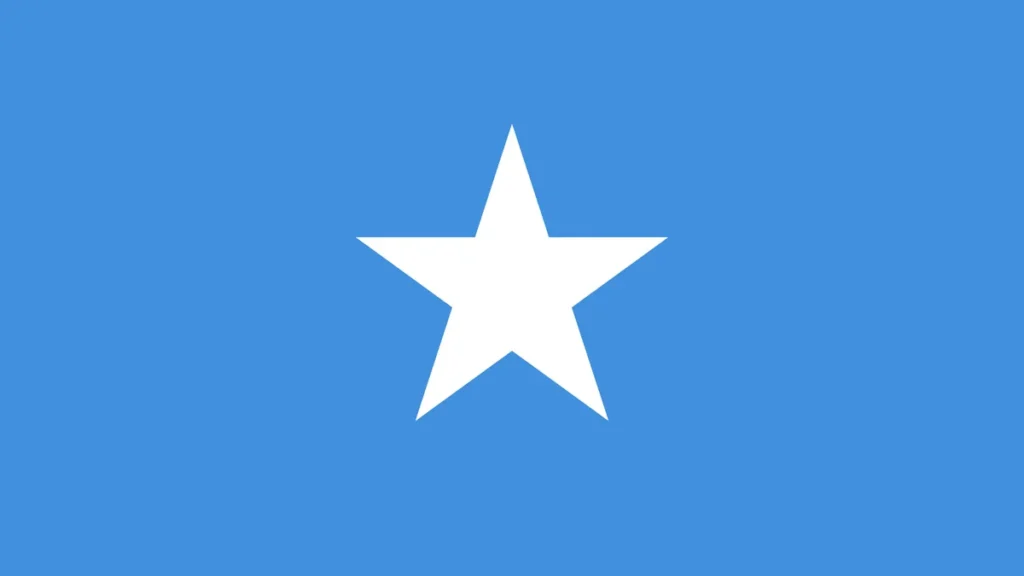
Somalia is located in the Horn of Africa, bordered by Ethiopia to the west, Kenya to the southwest, Djibouti to the northwest, and the Indian Ocean and Gulf of Aden to the east and north. The capital and seat of the federal government is Mogadishu. The population is estimated at approximately 18.1 million people as of 2025, according to UN Population Division projections, though reliable census data remains limited given decades of displacement and conflict. Official languages are Somali and Arabic. The currency is the Somali shilling (SOS), though the US dollar circulates widely in commerce and is the de facto currency for most significant transactions. GDP per capita sits in the low band of approximately USD 600–700 at current prices, placing Somalia among the world’s least-developed economies by conventional measures, though informal and remittance-driven activity means official figures substantially undercount real economic activity. Somalia matters acutely in 2026 for two intersecting reasons: the country’s 3,333-kilometre coastline — the longest in mainland Africa — sits astride one of the world’s most contested maritime corridors at a moment when Houthi disruption of Red Sea shipping has renewed international focus on Horn of Africa stability. Simultaneously, Somalia’s fragile but real institutional progress under its federal framework is being tested by a resurgent Al-Shabaab and a deepening humanitarian crisis driven by cyclical drought and flood.
Government and Politics
Somalia is a federal parliamentary republic. Executive authority is formally shared between a president and a prime minister, though in practice the presidency carries dominant political weight. The current head of state is President Hassan Sheikh Mohamud, a former academic and civil society figure who previously served as president from 2012 to 2017 and was re-elected by the Federal Parliament in May 2022 following a protracted electoral process delayed by more than a year of political deadlock. Prime Minister Hamza Abdi Barre, appointed in June 2022, leads the Council of Ministers. The legislature is bicameral: the Upper House (Senate) represents the Federal Member States, while the Lower House (House of the People) holds 275 seats. Both chambers are elected through a clan-based indirect electoral model — the so-called “4.5 formula” — which allocates seats proportionally among Somalia’s four major clan families plus a residual grouping for minorities. A direct one-person-one-vote election has been a stated ambition of successive governments; the 2026 electoral cycle is nominally intended to move toward a more direct model, but implementation timelines remain uncertain and contested. The provisional federal constitution, adopted in 2012 and subject to ongoing review, continues to govern the relationship between the Federal Government of Somalia (FGS) and its five recognised Federal Member States: Puntland, Jubaland, South West State, Hirshabelle, and Galmudug. Somaliland in the northwest continues to administer itself as a self-declared independent republic, unrecognised internationally, and its relationship with Mogadishu remains unresolved. A significant political development in early 2024 was Puntland’s suspension of relations with the FGS over constitutional disputes, adding a layer of internal federal tension to an already complex governance landscape.
Economy
Somalia’s GDP is estimated at approximately USD 11–12 billion in nominal terms as of 2024–25, though the World Bank and IMF both caution that data quality is poor and informal activity — including the substantial livestock trade and remittance flows — is structurally undercounted. The economy rests on three primary pillars: livestock and agriculture (accounting for an estimated 60–65 percent of GDP and the livelihoods of the majority of the rural population), remittances from the Somali diaspora (estimated at USD 1.3–1.5 billion annually, making them the single largest source of foreign exchange), and a growing telecommunications and mobile-money sector. Key exports are live animals, hides and skins, charcoal (though an international ban remains in place), and fish — the last being a sector with significant unrealised potential given Somalia’s coastline. Somalia reached the completion point of the Heavily Indebted Poor Countries (HIPC) Initiative in 2023, a landmark achievement that resulted in the cancellation of approximately USD 4.5 billion in external debt and opened access to concessional financing from international institutions for the first time in decades. This debt relief, secured after years of painstaking arrears clearance supported by the IMF and World Bank, is the single most consequential economic story of the past 24 months: it formally reintegrated Somalia into the international financial architecture and created conditions for scaled-up infrastructure and social investment. The Somali shilling remains weak and fragmented — multiple exchange rates operate across regions — and inflation, while difficult to measure precisely, has been elevated by global commodity price pressures and domestic supply disruptions. Fiscal revenues remain extremely low as a share of GDP, constraining the government’s ability to fund security and services without donor support.
Demographics and Society
Somalia has one of the youngest and fastest-growing populations in sub-Saharan Africa, with a median age estimated at approximately 17–18 years and a total fertility rate that remains among the highest in the world at around 6 births per woman. The population is overwhelmingly ethnically Somali, sharing a common language and, with very few exceptions, a common religion: Sunni Islam, which is both the state religion under the provisional constitution and a deeply embedded social institution. Minority groups — including the Bantu-origin Gosha communities, the Benadiri coastal populations, and various occupational castes — face structural marginalisation and are inadequately represented under the 4.5 clan formula. Urbanisation is accelerating rapidly: Mogadishu’s population is estimated at 2.5–3 million, and secondary cities including Hargeisa (in Somaliland), Kismayo, and Bosaso are growing as internal displacement, climate migration, and economic pull factors drive movement from rural areas. An estimated 3.8 million Somalis remain internally displaced as of 2025, according to UNHCR, making Somalia one of the world’s largest internal displacement crises. The defining social trend is the intersection of youth bulge and displacement: a generation of young Somalis — many born in camps or urban peripheries — is coming of age with limited formal education, high unemployment, and exposure to both Al-Shabaab recruitment and digital connectivity, creating a volatile but also potentially transformative demographic moment.
Key Issues Right Now
Al-Shabaab and the security transition. Al-Shabaab, the Al-Qaeda-affiliated insurgent group that controlled large parts of southern and central Somalia until 2011–12, remains the most significant security threat in the country and across the wider Horn. A government-led military offensive launched in 2022, supported by clan militias and the African Union Transition Mission in Somalia (ATMIS), made notable territorial gains in the Middle Shabelle and Hiiraan regions. However, Al-Shabaab has demonstrated resilience, reverting to asymmetric tactics including complex attacks on Mogadishu hotels, IED campaigns on supply routes, and the imposition of a parallel taxation system in rural areas it does not formally control. The scheduled drawdown of ATMIS forces — originally planned for full withdrawal by end-2024 but revised under pressure — and the transition to a Somali-led security architecture raise serious questions about the FGS’s capacity to hold liberated territory without external military support. The formation of a successor African Union mission remains under negotiation.
Climate vulnerability and the humanitarian crisis. Somalia is ranked among the countries most exposed to climate-related shocks globally. The 2021–2023 period saw five consecutive failed rainy seasons — the worst drought in four decades — followed by catastrophic flooding in late 2023 and 2024 driven by an exceptionally strong El Niño event. These overlapping shocks have driven acute food insecurity affecting an estimated 4–5 million people at peak crisis periods, according to the Integrated Food Security Phase Classification (IPC). The humanitarian response, coordinated through the UN Somalia Country Team, is chronically underfunded relative to assessed need. Climate adaptation — including investment in water harvesting, drought-resistant agriculture, and early warning systems — is increasingly central to both donor programming and the FGS’s own National Development Plan, but implementation capacity at the federal member state level remains thin.
Regional geopolitics and the Ethiopia-Somaliland memorandum of understanding. In January 2024, Ethiopia and Somaliland signed a memorandum of understanding granting Ethiopia access to the Red Sea coast in exchange for what was widely interpreted as a step toward Ethiopian recognition of Somaliland’s independence. The agreement provoked a sharp diplomatic crisis between Mogadishu and Addis Ababa, with the FGS recalling its ambassador and framing the MOU as a violation of Somali sovereignty. The episode has reactivated longstanding tensions in the Ethiopia-Somalia relationship, drawn in regional actors including Egypt — which has its own disputes with Ethiopia over the Grand Ethiopian Renaissance Dam — and complicated the security cooperation that underpins ATMIS. As of mid-2025, the MOU’s practical implementation remains unclear, but it has fundamentally altered the regional diplomatic calculus and elevated Somalia’s profile in African Union and Arab League deliberations.
Travel and Connectivity
Aden Adde International Airport in Mogadishu is the principal international gateway for the Federal Government of Somalia, handling connections to regional hubs including Nairobi, Dubai, Addis Ababa, and Istanbul. Hargeisa’s Egal International Airport serves Somaliland and has seen growing traffic as that territory’s relative stability attracts diaspora visitors and a nascent business travel market. Bosaso Airport in Puntland and Kismayo Airport in Jubaland serve secondary regional roles. Travel to most of southern and central Somalia, including Mogadishu, is subject to the highest-level travel advisories from Western governments due to the threat of terrorism, kidnapping, and armed conflict; most international visitors are humanitarian workers, journalists, or diaspora travellers. Somaliland presents a markedly different profile, with a functioning tourism sector — modest but growing — centred on Hargeisa, the prehistoric rock art of Laas Geel, and the port city of Berbera. Internet penetration nationally is estimated at 20–25 percent, with significant urban-rural disparity, though mobile connectivity is expanding rapidly through operators including Hormuud Telecom and its affiliates. Mobile money is a defining feature of the Somali economy: the EVC Plus platform operated by Hormuud is one of the most widely used mobile payment systems in sub-Saharan Africa relative to population, and Somalia is frequently cited as a global case study in mobile-money adoption in a low-infrastructure environment.
Further Research
Analysts, journalists, and investors seeking to deepen their understanding of Somalia should consult the following institutions and resources. The World Bank Somalia country page provides the most comprehensive publicly available macroeconomic data, including the periodic Somalia Economic Update series, which covers fiscal developments, debt relief progress, and sector analysis. The Africa Center for Strategic Studies (part of the US National Defense University) publishes regular security-focused briefings on Al-Shabaab, ATMIS, and the broader Horn of Africa security architecture. The UN Somalia country team, coordinated through UNSOM and OCHA Somalia, produces situation reports, humanitarian response plans, and IPC food security assessments that are essential for understanding the humanitarian and displacement dimensions. The Heritage Institute for Policy Studies, based in Mogadishu, is Somalia’s leading independent think tank and publishes policy briefs on governance, federalism, and economic reform from a Somali analytical perspective. The Rift Valley Institute, with its Horn of Africa programme, offers rigorous long-form research on clan politics, land tenure, and conflict dynamics. Finally, the IMF Somalia country page is the authoritative source for data on the HIPC completion process, Article IV consultations, and the Extended Credit Facility programme that underpins Somalia’s macroeconomic reform agenda.