Benin — Expert Briefing
Benin at a glance: A small but strategically positioned West African state navigating an assertive political centralisation at home while emerging as a regional logistics hub and a cautionary case study in democratic backsliding.
Overview
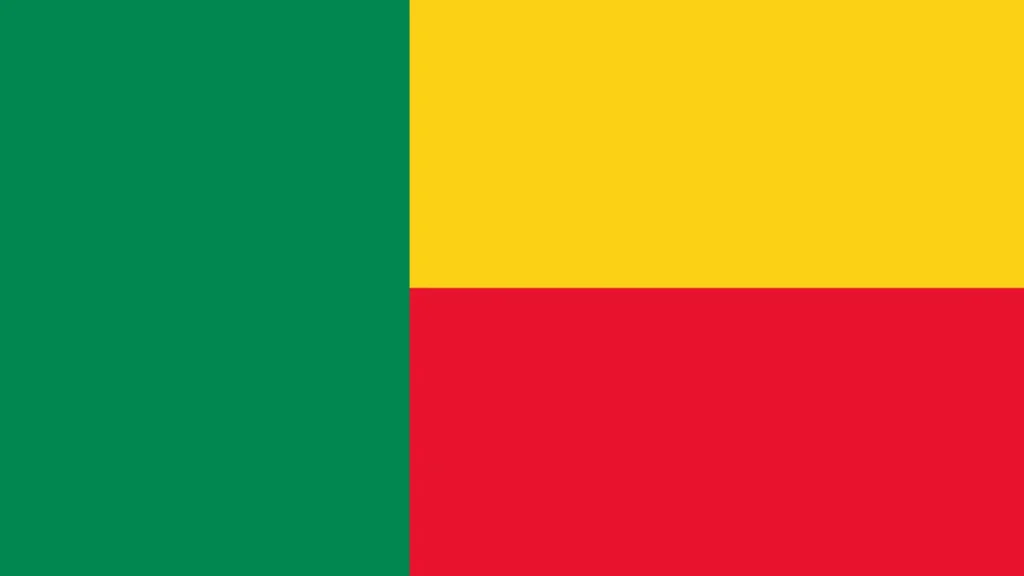
Benin — officially the Republic of Benin — occupies a narrow north-south strip of West Africa between Togo to the west, Nigeria to the east, Burkina Faso and Niger to the north, and the Gulf of Guinea to the south. Its capital is Porto-Novo, though the seat of government and commercial centre is Cotonou, the country’s largest city. The population is estimated at approximately 13.7 million (World Bank, 2024 projection), growing at roughly 2.7 percent annually. French is the sole official language; the currency is the West African CFA franc (XOF), shared with seven other members of the West African Economic and Monetary Union (WAEMU). GDP per capita sits in the lower-middle-income band, estimated at around USD 1,400–1,600 in nominal terms, though purchasing-power-adjusted figures are somewhat higher. Benin matters in 2026 for two intersecting reasons: it is one of the few coastal West African states that has so far avoided a military coup in a region convulsed by them, yet its democratic credentials have eroded sharply under President Patrice Talon; and its port at Cotonou serves as a critical transit corridor for landlocked Sahel states whose own political crises have reshuffled regional trade routes in ways that both burden and benefit Benin’s economy.
Government and Politics
Benin is a presidential republic. Executive power is concentrated in the presidency; there is no prime ministerial office. The current head of state is Patrice Talon, a cotton and port-logistics magnate who first won the presidency in 2016 on a reform platform and was re-elected in April 2021 in a poll widely criticised by opposition groups and international observers for excluding credible rival candidates. Talon is constitutionally barred from seeking a third term; the next presidential election is scheduled for April 2026, making the succession question the dominant political story of the current moment. The legislature is the unicameral National Assembly (Assemblée Nationale), comprising 109 seats elected by proportional representation. Following controversial electoral law reforms introduced in 2019 — which required parties to meet a high financial threshold to register and effectively locked out most opposition formations — the chamber has been dominated by pro-Talon blocs. The 2023 legislative elections saw a modest return of nominal opposition representation, though critics argue the structural constraints remain. A significant constitutional revision in 2019 introduced a “sponsorship” system requiring presidential candidates to secure endorsements from a set number of elected officials, a mechanism that opposition figures contend is designed to filter out challengers. Freedom House currently rates Benin as “Partly Free,” a downgrade from its earlier “Free” status — a trajectory that has attracted sustained commentary from the Africa Center for Strategic Studies and regional civil society networks.
Economy
Benin’s GDP is estimated at approximately USD 19–21 billion in nominal terms (2024), placing it among the smaller economies in the ECOWAS zone by absolute size but among the more consistent performers by growth rate, which has averaged around 6 percent annually over the past decade. Agriculture remains the backbone of the economy, employing the majority of the working population; cotton is the dominant cash crop and the principal formal export earner, with Benin ranking among Africa’s top cotton producers. The port of Cotonou — operated under a concession arrangement that has been a source of political controversy — is the economy’s other structural pillar, generating transit revenues from goods destined for Niger, Burkina Faso, and Mali. Cashew nuts, shea, and pineapple are growing agricultural exports. Benin is a member of WAEMU and therefore shares monetary policy with the Banque Centrale des États de l’Afrique de l’Ouest (BCEAO); the CFA franc’s peg to the euro provides monetary stability but limits exchange-rate flexibility. Public debt has risen to approximately 50–54 percent of GDP, elevated but not yet at crisis levels; the IMF has maintained an engagement programme supporting fiscal consolidation. The single most consequential economic story of the past 24 months is the fallout from the Sahel coups on transit trade. The military governments in Niger, Burkina Faso, and Mali have imposed or threatened import restrictions, renegotiated port agreements, and in Niger’s case faced an ECOWAS embargo following the July 2023 coup — all of which disrupted established trade corridors through Cotonou. While some disruption has been real, Benin has simultaneously positioned itself to capture redirected flows, accelerating investment in port infrastructure and the Cotonou–Niamey road corridor, making the net economic impact more ambiguous than initial headlines suggested.
Demographics and Society
Benin’s population of approximately 13.7 million is young — the median age is estimated at around 18 years — and growing rapidly, with a total fertility rate that remains above 4.5 births per woman, one of the higher rates in the sub-region. The country is ethnically and linguistically diverse: the Fon and related groups are the largest cluster in the south, followed by the Adja, Yoruba (concentrated near the Nigerian border), Bariba in the north, and the Fulani (Peul) pastoralist community spread across the northern departments. This ethnic geography broadly maps onto a north-south socioeconomic divide, with the south — particularly the Cotonou-Porto-Novo-Abomey-Calavi corridor — more urbanised, better served by infrastructure, and more economically integrated. Urbanisation is accelerating: the urban share of the population is estimated at around 50 percent and rising, with Cotonou’s metropolitan area growing rapidly through informal peri-urban expansion. Religiously, Benin is notable for the coexistence of Christianity (predominantly in the south), Islam (stronger in the north), and Vodoun — the indigenous spiritual tradition that originated in this region and from which the diaspora religion Voodoo derives. Vodoun retains genuine cultural and social authority, and Benin has made it a point of cultural diplomacy, hosting an annual national Vodoun Day. The defining social trend of the current period is youth unemployment and emigration pressure: a rapidly expanding youth cohort is entering a labour market that cannot absorb it at the pace required, driving both rural-to-urban migration internally and, increasingly, irregular migration toward North Africa and Europe — a dynamic that intersects with the security deterioration in the Sahel to produce complex displacement pressures in Benin’s northern departments.
Key Issues Right Now
1. Jihadist insurgency in the north. The most acute security development of recent years is the southward spread of jihadist violence from the Sahel into Benin’s northern departments, particularly Alibori and Atacora, which border Burkina Faso and Niger. Groups affiliated with Jama’at Nusrat al-Islam wal-Muslimin (JNIM) and the Islamic State in the Greater Sahara (ISGS) have conducted attacks on security forces, villages, and park rangers in and around the W-Arly-Pendjari (WAP) transboundary protected area complex. The Beninese government has responded with a significant military build-up, foreign security partnerships — including with France and the European Union’s Sahel-adjacent programmes — and restrictions on movement in affected zones. The insurgency remains at a lower intensity than in Burkina Faso or Mali, but its trajectory is a source of serious concern for analysts and a direct threat to the tourism economy built around Pendjari National Park.
2. The 2026 presidential succession. With Patrice Talon constitutionally unable to stand again, the question of who will succeed him — and whether the electoral framework will permit a genuinely competitive contest — is the central political preoccupation of 2025–2026. The sponsorship system and party registration rules remain in place, and opposition figures in exile or facing legal proceedings have not been rehabilitated. International partners, including the European Union and the United States, have signalled concern about the conditions for a credible election. The outcome will be a significant indicator of whether Benin’s democratic regression is structural or reversible, and will be closely watched across a region where civilian governance is under pressure.
3. Climate vulnerability and agricultural stress. Benin faces compounding climate risks: erratic rainfall patterns are disrupting cotton and food crop cycles in the north, while coastal erosion along the Gulf of Guinea shoreline — particularly severe around Cotonou and the historic fishing community of Grand-Popo — is accelerating. Flooding events have become more frequent and severe in the interior. The government has engaged with international climate finance mechanisms and the African Development Bank on adaptation programmes, but implementation capacity remains limited. For a country where agriculture employs the majority of the workforce and the port sits on a vulnerable coastline, climate adaptation is not a long-term abstraction but an immediate economic and social management challenge.
Travel and Connectivity
The principal international gateway is Cadjehoun Airport in Cotonou (IATA: COO), which handles the overwhelming majority of international passenger traffic. It is served by regional carriers including Air Côte d’Ivoire, Ethiopian Airlines, Air France, and Royal Air Maroc, among others; direct intercontinental connections are limited and most long-haul travellers connect through Abidjan, Addis Ababa, Casablanca, or Paris. A new international airport at Glo-Djigbé, part of a broader special economic zone development, has been under construction and is intended to expand capacity significantly. Principal cities beyond Cotonou include Porto-Novo (the constitutional capital), Parakou (the main commercial centre of the north and a key node on the transit corridor), Abomey (historically significant as the seat of the Dahomey Kingdom), and Natitingou (gateway to Pendjari). Tourism has been a government priority: Benin has invested in the restoration of royal palaces at Abomey (a UNESCO World Heritage Site), the “Route des Esclaves” memorial complex at Ouidah, and ecotourism infrastructure around Pendjari National Park. The security situation in the north has, however, dampened ecotourism significantly since 2021. Internet penetration is estimated at 35–45 percent of the population, with mobile internet the dominant access mode; fixed broadband infrastructure remains limited outside Cotonou. Mobile money adoption is substantial and growing, integrated into the broader WAEMU interoperability framework, with MTN Mobile Money and Moov Money the leading platforms — increasingly used for remittances, merchant payments, and government disbursements.
Further Research
Analysts and researchers seeking to deepen their understanding of Benin should consult the following institutions and resources. The World Bank Benin country page provides regularly updated macroeconomic data, poverty assessments, and project documentation. The Banque Centrale des États de l’Afrique de l’Ouest (BCEAO) publishes monetary, financial, and trade statistics covering all WAEMU members including Benin. The Africa Center for Strategic Studies (based in Washington, D.C.) has produced substantive analysis on both the Sahel security spillover into coastal states and on democratic governance trends in the region. The Institut National de la Statistique et de la Démographie du Bénin (INSAE) — Benin’s national statistics office — is the primary source for census data, household surveys, and official demographic estimates. The International Crisis Group has published reporting on the jihadist threat in Benin’s northern departments and the broader coastal West Africa security dynamic. Finally, the African Development Bank’s Benin country profile offers infrastructure investment data, economic outlook assessments, and project pipelines relevant to investors and development finance analysts.