Togo statistics — population, economy, trade and telecom
As African policymakers, investors, and development partners sharpen their focus on West Africa’s smaller frontier economies in 2026, Togo occupies a strategically significant position that its modest size belies. Sitting at the crossroads of the Economic Community of West African States (ECOWAS) and serving as a key transit hub for landlocked neighbours, Togo’s macroeconomic trajectory, demographic pressures, and digital transformation offer a revealing lens into the broader dynamics shaping the region. The data presented here draws on the most recent available reference points from 2024 and 2025.
Population and demographics
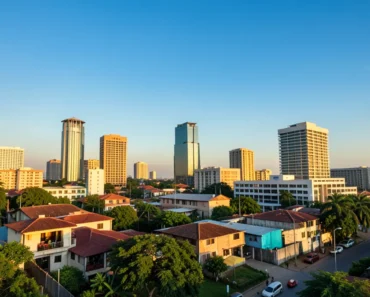
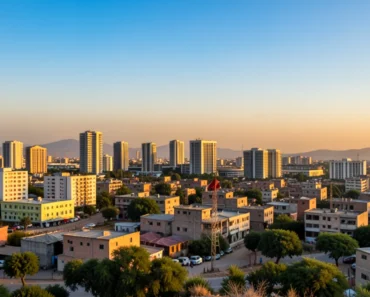
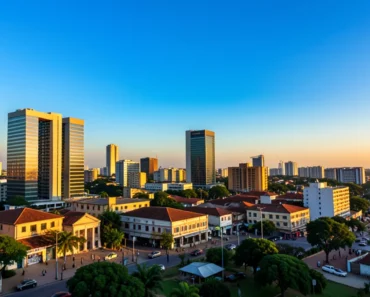
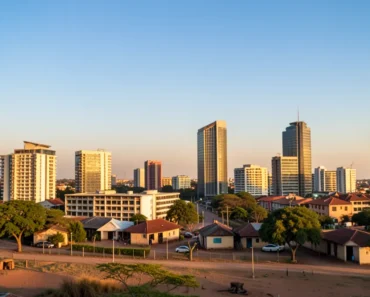
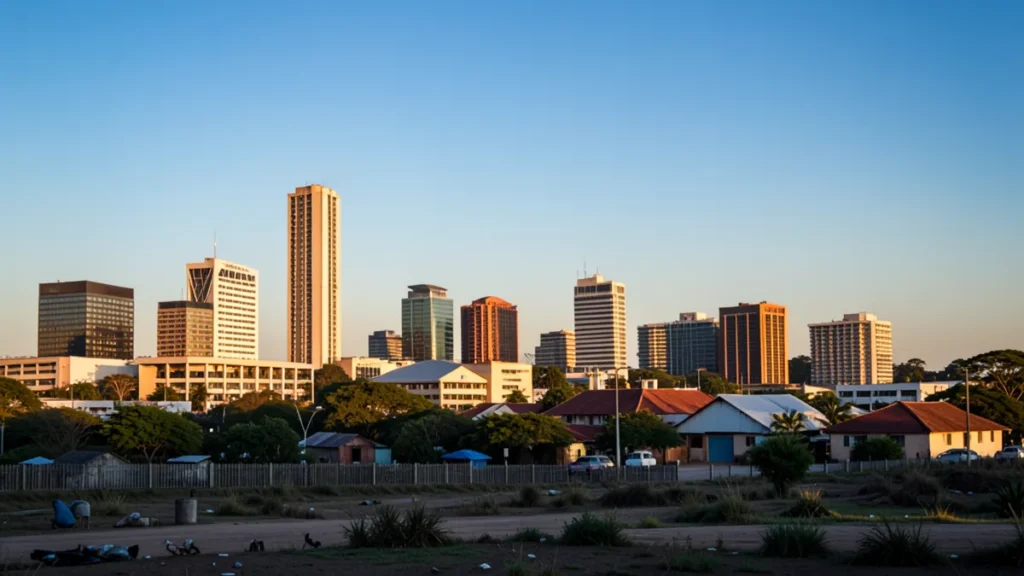
Togo’s population is estimated at approximately 9.5 million people as of 2025, according to UN Population Division projections, making it one of West Africa’s smaller nations by headcount but one of the most densely settled relative to its land area. The annual population growth rate sits at roughly 2.5 to 2.7 percent, sustaining persistent pressure on public services, labour markets, and agricultural land. The median age is estimated at around 19 years, reflecting an overwhelmingly young population that presents both a long-run demographic dividend and an immediate challenge for employment creation. Urbanisation has been accelerating: World Bank data suggests that approximately 45 to 47 percent of the population now lives in urban areas, with Lomé — the capital and only major port city — accounting for a disproportionate share of that urban concentration. Secondary towns such as Sokodé, Kara, and Atakpamé are growing but remain significantly smaller in economic weight.
Economic indicators
Togo’s GDP is estimated at roughly 9 to 10 billion US dollars in current prices for 2024, with the IMF projecting modest nominal expansion into 2025. GDP per capita stands at approximately 1,000 to 1,100 US dollars at current exchange rates, placing Togo firmly in the low-income category, though purchasing power parity adjustments lift this figure somewhat. Real GDP growth has been relatively resilient: IMF Article IV assessments have pointed to growth in the range of 5 to 6 percent for 2024, supported by public investment, port activity, and services sector expansion. Inflation, measured by the consumer price index, moderated from earlier post-pandemic highs to roughly 3 to 5 percent by late 2024, partly anchored by Togo’s membership in the West African Economic and Monetary Union (WAEMU) and its use of the CFA franc (XOF), which maintains a fixed peg to the euro. Unemployment figures are difficult to measure precisely in a predominantly informal economy, but underemployment is widely regarded as the more structurally significant challenge. Public debt as a share of GDP has been a concern: IMF estimates have placed Togo’s debt-to-GDP ratio at approximately 65 to 70 percent in recent years, elevated relative to regional peers, though the government has pursued fiscal consolidation measures under IMF programme frameworks.
Trade and external accounts
Togo’s trade profile is shaped by its role as a re-export and transit hub as much as by its domestic productive base. Phosphate rock and phosphate-derived products are the country’s most significant export commodity, with Togo holding some of the world’s highest-grade phosphate deposits. Cotton, cocoa, and coffee are also notable agricultural exports, though their volumes fluctuate with weather conditions and global commodity prices. Cement and clinker exports — produced domestically and shipped to landlocked neighbours — have grown in importance. On the import side, Togo brings in refined petroleum products, machinery, vehicles, food commodities, and manufactured goods. Key trading partners include China, which has expanded its commercial footprint significantly, alongside France, India, and regional ECOWAS partners such as Burkina Faso, Mali, and Niger, which rely heavily on the Port of Lomé for access to global markets. The current account deficit has historically been wide, reflecting the import-intensive nature of investment and consumption, with World Bank estimates suggesting deficits in the range of 5 to 8 percent of GDP in recent years, partially offset by remittance inflows and official development assistance.
Key sectors
Agriculture remains the backbone of livelihoods for the majority of Togo’s rural population, contributing roughly 20 to 25 percent of GDP and employing an estimated 50 to 60 percent of the workforce. Subsistence farming dominates, with maize, sorghum, cassava, and yams as staple crops. The industrial sector, contributing approximately 20 percent of GDP, is anchored by phosphate mining and processing, cement production, and agro-processing. The Lomé Container Terminal — operated under a concession and regarded as one of West Africa’s most efficient deep-water ports — is a critical national asset, driving logistics and warehousing activity. The services sector is the largest contributor to GDP at roughly 50 to 55 percent, encompassing trade, transport, financial services, and government services. Tourism remains underdeveloped relative to regional peers, though Lomé’s coastal position and cultural heritage offer latent potential. The government’s Togo 2025 and subsequent national development frameworks have prioritised agro-industrial transformation and special economic zones as vehicles for structural diversification.
Telecommunications and digital
Togo’s telecommunications sector has expanded rapidly over the past decade. Mobile penetration is estimated at approximately 80 to 90 percent of the population on a SIM subscription basis, though unique subscriber penetration is lower when accounting for multi-SIM usage. Internet penetration has grown significantly, with ITU and GSMA data suggesting that roughly 30 to 40 percent of the population accessed the internet in some form by 2024, driven primarily by mobile broadband. The dominant mobile operators are Togocel (a state-linked entity) and Moov Africa Togo (part of the pan-African Maroc Telecom group). Mobile money has become a critical financial infrastructure layer: services such as Flooz (Moov) and T-Money (Togocel) have achieved meaningful adoption, supporting remittance flows, merchant payments, and government-to-person transfers. Togo has also positioned itself as a regional digital hub ambition, with the government investing in fibre backbone infrastructure and data centre capacity. Regulatory oversight falls under the Autorité de Réglementation des Communications Électroniques et des Postes (ARCEP).
Sources and methodology
The statistics and estimates presented in this dashboard draw on a range of authoritative sources, including the World Bank’s World Development Indicators and Open Data platform, IMF World Economic Outlook databases and Article IV consultation reports, the United Nations Population Division’s World Population Prospects, the International Telecommunication Union (ITU) ICT statistics database, GSMA Intelligence mobile connectivity data, the African Union’s statistical frameworks, and the Institut National de la Statistique et des Études Économiques et Démographiques (INSEED) of Togo. Where precise figures could not be confirmed with certainty, ranges and approximating language have been used deliberately to avoid misrepresentation. Data reference points reflect the 2024–2025 period; figures are subject to revision as national accounts and survey data are updated. Readers requiring investment-grade precision are advised to consult primary source databases directly and to engage qualified country specialists.
For deeper qualitative and strategic analysis of Togo’s political economy, governance environment, and investment landscape, visit our Togo expert briefing. To benchmark Togo against other African nations, explore our full library of all African country statistics. For broader context on growth trends, trade dynamics, and structural transformation across the continent, see our African economy pillar.