Mauritania statistics — population, economy, trade and telecom
As West Africa’s vast Saharan frontier state enters 2026, Mauritania occupies an increasingly strategic position in regional energy, migration, and security conversations. The country’s accelerating offshore gas development, persistent structural poverty, and expanding digital infrastructure make its statistical profile essential reading for investors, policymakers, and development practitioners tracking the Sahel corridor. Understanding Mauritania’s numbers in granular detail is a prerequisite for informed engagement with one of Africa’s most consequential emerging economies.
Population and Demographics
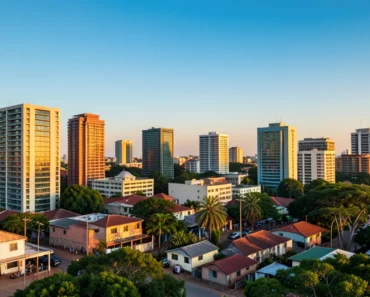
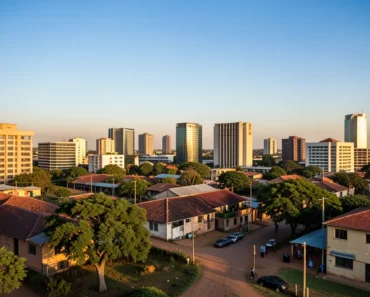
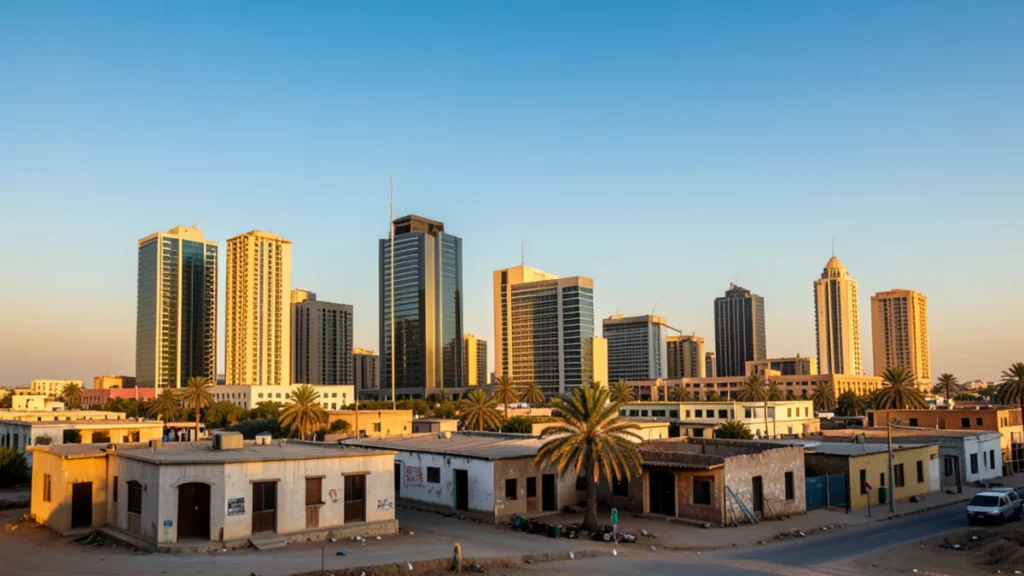
Mauritania’s population is estimated at approximately 4.7 to 4.9 million people as of 2025, according to UN Population Division projections, making it one of the least densely populated countries on the continent relative to its land area of over one million square kilometres. The annual population growth rate sits at roughly 2.7 to 2.9 percent, sustaining consistent demographic pressure on public services and labour markets. The median age is estimated at around 20 years, reflecting a predominantly young population with significant youth bulge dynamics. Urbanisation has accelerated markedly over the past decade: World Bank data suggests that approximately 57 to 60 percent of the population now lives in urban areas, with the capital Nouakchott alone accounting for a disproportionate share of that figure — the city’s population is broadly estimated at over one million. Internal migration from rural and nomadic communities toward coastal urban centres continues to reshape settlement patterns, straining municipal infrastructure while concentrating economic activity.
Economic Indicators
Mauritania’s GDP is estimated at roughly 10 to 11 billion US dollars at current prices for 2024, with IMF projections pointing toward continued expansion through 2025 and 2026 as offshore gas revenues begin to materialise more fully. GDP per capita stands at approximately 2,100 to 2,400 US dollars, positioning the country in the lower-middle-income bracket, though purchasing power parity figures are somewhat higher. Real GDP growth was estimated at around 4 to 5 percent for 2024, underpinned by mining output, construction activity, and early-stage hydrocarbon contributions. Inflation has been a persistent concern: consumer price inflation was broadly reported in the range of 4 to 7 percent during 2024, influenced by global commodity prices and food import costs. The national currency, the Mauritanian ouguiya (MRU), has faced moderate depreciation pressures. Unemployment figures are difficult to verify with precision given the large informal sector, but official estimates and World Bank assessments suggest headline unemployment in the range of 10 to 12 percent, with youth unemployment considerably higher. Public debt-to-GDP is estimated at roughly 50 to 60 percent, a level that international creditors consider manageable but that warrants monitoring given the country’s reliance on commodity revenues and concessional financing.
Trade and External Accounts
Mauritania’s export base remains heavily concentrated in primary commodities. Iron ore is the dominant export earner, with the state mining company SNIM operating one of Africa’s largest iron ore complexes in the Zouerate region. Fish and fisheries products constitute the second major export category, reflecting the country’s access to some of the Atlantic’s most productive fishing grounds. Gold exports have grown in relevance, and liquefied natural gas is anticipated to become a transformative export stream as the Greater Tortue Ahmeyim LNG project — a joint development with Senegal — ramps toward full commercial production. Top import categories include refined petroleum products, foodstuffs, machinery, and manufactured goods. China, the European Union (particularly Spain and France), Japan, and Gulf states feature prominently among trading partners, both as export destinations and import sources. The current account has historically run a deficit, though hydrocarbon-related inflows are expected to shift this trajectory. Industry reports and IMF Article IV assessments suggest the current account deficit was in the range of 8 to 14 percent of GDP in recent years, a figure that gas revenues may substantially compress over the medium term.
Key Sectors
Mining is the backbone of Mauritania’s formal economy, with iron ore extraction accounting for a substantial share of export revenues and government receipts. The SNIM operation at Zouerate and associated rail infrastructure to Nouadhibou represent the country’s most significant industrial asset. The nascent hydrocarbons sector — centred on the offshore Greater Tortue Ahmeyim field shared with Senegal — is widely regarded as the most consequential economic development of the decade, with BP and Kosmos Energy among the international operators involved. Fisheries represent both a major export earner and a critical livelihood sector, though overfishing concerns and the terms of access agreements with foreign fleets remain politically sensitive. Agriculture, including livestock herding, engages a large share of the rural population but contributes a relatively modest share of GDP given the country’s predominantly arid geography. The services sector, including trade, transport, and government services, accounts for the largest share of GDP in structural terms. Tourism remains underdeveloped relative to regional peers, constrained by infrastructure gaps and security perceptions in the broader Sahel context, though cultural and eco-tourism potential exists around Chinguetti and the Banc d’Arguin National Park.
Telecommunications and Digital
Mauritania’s telecommunications sector has expanded rapidly over the past decade, though significant rural connectivity gaps persist. Mobile penetration is estimated at roughly 90 to 100 percent of the population on a SIM basis, though unique subscriber penetration is lower. Internet penetration has grown considerably, with ITU and GSMA data suggesting that active internet users represent approximately 55 to 65 percent of the population as of 2024 to 2025, with mobile broadband as the primary access channel. The dominant mobile operators are Mauritel (linked to Maroc Telecom), Mattel, and Chinguitel, which together cover the principal urban corridors. Mobile money adoption has increased, driven by financial inclusion initiatives and the limited reach of formal banking, though penetration remains below the levels seen in West African peers such as Senegal or Côte d’Ivoire. The government has signalled interest in expanding fibre backbone infrastructure and improving cross-border connectivity as part of broader digital economy ambitions aligned with the African Union’s Digital Transformation Strategy.
Sources and Methodology
The figures and estimates presented in this dashboard draw on a range of authoritative international and regional sources. Primary references include the World Bank’s World Development Indicators and country data portal, IMF Article IV Consultation reports and World Economic Outlook databases, UN Population Division projections, the International Telecommunication Union (ITU) statistics portal, and GSMA Intelligence mobile market data. Sectoral and trade data reference the Observatory of Economic Complexity (OEC), the African Development Bank’s African Economic Outlook, and publicly available reporting from the Mauritanian Office National de la Statistique (ONS). Where precise figures could not be independently verified, ranges and approximations are used in accordance with this publication’s editorial standards. Readers are encouraged to consult primary source databases directly for the most current revisions, as national accounts data for Mauritania is subject to periodic rebasing and methodological updates.
For deeper qualitative analysis of Mauritania’s political economy, investment climate, and strategic outlook, visit the Mauritania expert briefing. To benchmark Mauritania against other African nations, explore all African country statistics on this platform. For broader context on structural trends shaping the continent’s economies, see our African economy pillar coverage.