Eritrea statistics — population, economy, trade and telecom
As the Horn of Africa navigates shifting geopolitical alignments, port competition, and climate-driven food insecurity in 2026, Eritrea remains one of the continent’s most opaque yet strategically significant states. Its position on the Red Sea corridor, its unresolved relationship with Ethiopia, and its tightly controlled economy make reliable data both scarce and consequential. Tracking Eritrea’s statistics matters not only for investors and policymakers but for understanding broader regional dynamics across East Africa and the Gulf of Aden.
Population and demographics
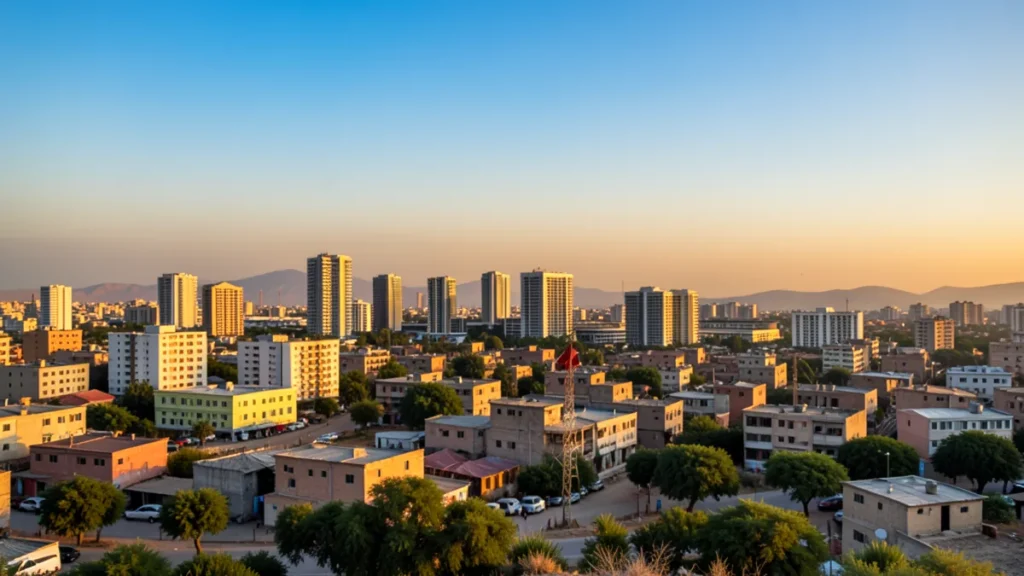
Eritrea’s population is estimated at approximately 3.5 to 3.7 million residents, though this figure carries significant uncertainty. The government has not conducted a comprehensive national census in decades, and sustained emigration — driven by mandatory indefinite national service and limited economic opportunity — has materially reduced the domestic population. The UN Population Division and World Bank both flag this emigration dynamic as a major complicating factor in any demographic estimate. Diaspora communities, particularly in Ethiopia (prior to the 2018 rapprochement and subsequent tensions), Sudan, Europe, and North America, are thought to number in the hundreds of thousands. The urbanisation rate is relatively low, with roughly 42 to 45 percent of the population living in urban areas, concentrated primarily in the capital Asmara and the port city of Massawa. The median age is estimated at approximately 19 to 20 years, reflecting a young population structure typical of sub-Saharan and East African nations, and the annual population growth rate is placed at roughly 1.5 to 2 percent, though net emigration suppresses effective domestic growth considerably.
Economic indicators
Eritrea’s economy is among the least transparent in Africa. The IMF has not conducted a formal Article IV consultation with Eritrea in many years, and the government publishes limited macroeconomic data. World Bank estimates put nominal GDP at roughly 2 to 2.5 billion USD, with GDP per capita in the range of approximately 550 to 700 USD — placing Eritrea among the lower-income economies on the continent. GDP growth is difficult to verify independently; government sources have cited positive growth figures, but external analysts and the IMF have expressed scepticism given structural constraints, international sanctions, and the disruption caused by the Tigray conflict in neighbouring Ethiopia, which affected cross-border trade and logistics through 2022 and into subsequent years. Inflation has historically been a persistent challenge, with estimates suggesting annual price increases in the range of 5 to 10 percent in recent years, though official data is sparse. Unemployment, particularly among youth, is structurally high, compounded by the national service system which absorbs large segments of the working-age population into military or state-directed labour at minimal pay. The official currency is the Eritrean nakfa (ERN), which operates under a fixed exchange rate regime. A parallel market exists, and the gap between official and informal rates has at times been substantial. Public debt-to-GDP ratios are estimated by external observers to be elevated, potentially exceeding 150 percent of GDP when accounting for arrears and military expenditure obligations, though verified figures remain elusive.
Trade and external accounts
Eritrea’s trade profile is narrow and heavily influenced by its mining sector and import dependency. The country’s top export is gold, which accounts for the dominant share of formal export earnings, followed by other minerals including zinc and copper concentrates. Livestock and some agricultural products are also exported, primarily to Gulf states. On the import side, Eritrea relies heavily on food commodities, petroleum products, machinery, and manufactured goods. Key trading partners on the export side include the United Arab Emirates and China, while imports arrive from a broader range of partners including China, India, and various Gulf states. The current account balance is structurally negative, with the trade deficit partially offset by remittances from the diaspora — a critical source of foreign exchange. Industry reports suggest remittances may represent one of the largest single inflows of hard currency into the economy, though precise figures are not publicly disclosed by the government.
Key sectors
Agriculture employs the majority of Eritrea’s workforce — estimates suggest roughly 65 to 70 percent of the population depends on farming and pastoralism for their livelihoods — yet the sector is highly vulnerable to erratic rainfall and recurring drought. Subsistence farming dominates, with sorghum, millet, and barley as staple crops. Food insecurity remains chronic, with the World Food Programme maintaining a sustained presence in the country. Mining is the most commercially significant sector in terms of export revenue. The Bisha mine, operated in a joint venture between the government and international partners, has been the flagship project, producing gold, copper, and zinc. Exploration activity for additional mineral deposits continues, and Eritrea’s geological profile is considered prospective by industry analysts. The services sector is underdeveloped relative to regional peers, constrained by limited private sector activity and state dominance of the economy. Tourism, despite Asmara’s UNESCO-listed modernist architecture and the country’s Red Sea coastline, remains negligible due to visa restrictions, infrastructure gaps, and the country’s international isolation. The fishing sector along the Red Sea coast holds latent potential but remains largely underdeveloped.
Telecommunications and digital
Eritrea has one of the lowest telecommunications penetration rates in Africa. The ITU and GSMA have consistently ranked it near the bottom of continental connectivity indices. Mobile penetration is estimated at roughly 20 to 25 percent of the population, and internet penetration is among the lowest globally — likely below 10 percent of the population based on available ITU data. Eritrea Telecommunications Corporation (EriTel) is the sole operator, functioning as a state monopoly across fixed-line, mobile, and internet services. This monopoly structure, combined with government content controls and limited infrastructure investment, has severely constrained digital development. Mobile money and fintech services, which have transformed financial inclusion across much of sub-Saharan Africa, are effectively absent in Eritrea. There is no meaningful private sector participation in the digital economy, and international platforms face significant access restrictions.
Sources and methodology
This dashboard draws on publicly available data and estimates from the World Bank Open Data platform, IMF World Economic Outlook and staff reports, the United Nations Population Division, the International Telecommunication Union (ITU), GSMA Intelligence, the UN World Food Programme, and the African Union Commission. Where Eritrea’s government has not published official statistics — which is frequently the case — figures are drawn from multilateral estimates, academic literature, and industry analyst reports. All figures should be treated as approximations. Readers conducting due diligence or policy analysis are strongly advised to cross-reference with the most recent IMF and World Bank country pages and to note that data gaps for Eritrea are among the most significant of any African state. Africa Research will update this dashboard as new verified data becomes available.
For deeper qualitative and geopolitical context, visit the Eritrea expert briefing. To benchmark Eritrea against other African nations, explore all African country statistics. For broader analysis of growth trends, investment climates, and structural transformation across the continent, see the African economy pillar.