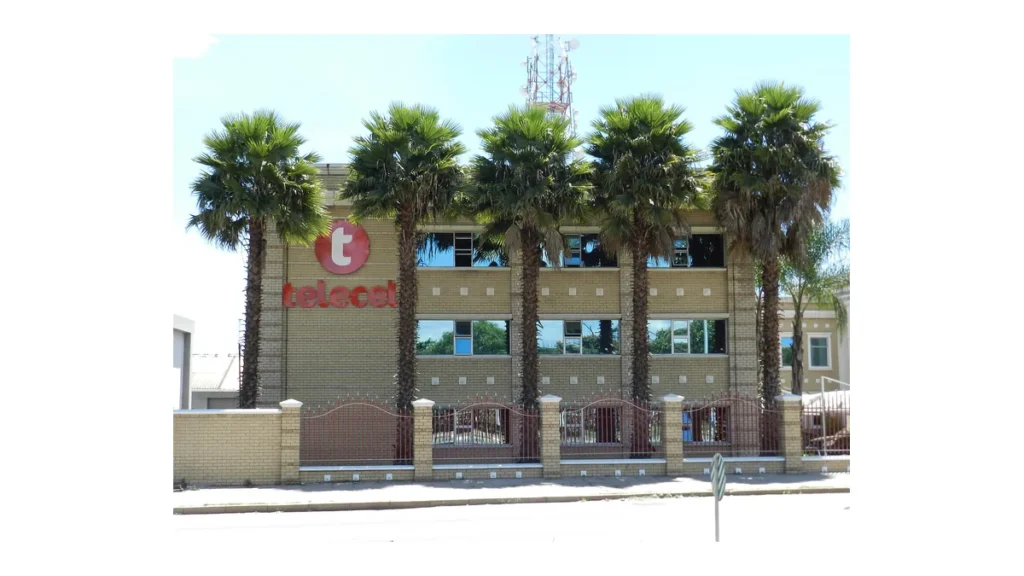
Telecel Zimbabwe
Telecel Zimbabwe
About
Telecel Zimbabwe is one of the country’s three licensed mobile network operators, occupying a distinct position in Zimbabwe’s telecommunications landscape as a state-controlled carrier competing in a market long dominated by Econet Wireless Zimbabwe. Operating under the Telecel brand, the Harare-headquartered operator serves a predominantly urban and peri-urban subscriber base across its 2G and 3G network infrastructure, offering voice, data, and mobile financial services to both retail and enterprise customers.
The operator traces its origins to the late 1990s, when Zimbabwe’s government first moved to liberalise its telecommunications sector. Telecel Zimbabwe was awarded one of the country’s earliest private mobile licences, initially operating as a joint venture with international shareholders including the pan-African group Telecel International. The early 2000s brought significant turbulence, with the operator navigating Zimbabwe’s broader economic crisis alongside contested ownership arrangements and recurring licence disputes with the regulator.
Ownership underwent a decisive shift in the 2010s. Following protracted legal and regulatory battles over shareholding compliance with Zimbabwe’s indigenisation legislation, the Government of Zimbabwe assumed a controlling stake in the operator. The state’s interest is held through government-linked entities, making Telecel Zimbabwe one of the few directly state-controlled mobile operators on the continent. That structure has shaped the operator’s strategic direction, capital access, and its relationship with the regulatory authority ever since.
Country market context
Zimbabwe’s mobile market is regulated by the Postal and Telecommunications Regulatory Authority of Zimbabwe (POTRAZ), which publishes quarterly sector performance reports tracking penetration, traffic, and operator market share. According to the most recent POTRAZ data, mobile penetration has trended above 90 percent of the population on a SIM basis, though unique-subscriber penetration remains meaningfully lower when accounting for multi-SIM usage — a common pattern across sub-Saharan Africa. The market is structured around three licensed mobile operators: Econet Wireless Zimbabwe, which commands a commanding majority of both subscribers and revenue; NetOne, a state-owned operator; and Telecel Zimbabwe. Econet’s dominance is well-documented in successive POTRAZ reports, leaving NetOne and Telecel competing for the residual share of a price-sensitive market. Infrastructure investment across the sector has been constrained by Zimbabwe’s persistent macroeconomic instability, currency volatility, and foreign-exchange scarcity. → Read the Zimbabwe expert briefing
Network and technology
Telecel Zimbabwe operates a 2G (GSM) and 3G (WCDMA/UMTS) network, with coverage concentrated in Harare, Bulawayo, and other major urban centres. Rural coverage remains limited relative to Econet’s more extensive national footprint, a gap that reflects the capital constraints associated with state ownership and the operator’s smaller revenue base. The operator holds spectrum allocations in bands consistent with its 2G and 3G service obligations, as licensed and monitored by POTRAZ. No commercial 4G LTE or 5G deployment has been confirmed as of early 2026, placing Telecel at a technology disadvantage relative to Econet, which has operated LTE services for several years. Industry observers note that any meaningful network modernisation programme would likely require either significant government capital injection or a strategic partnership with an infrastructure or technology vendor.
Products and services
Telecel Zimbabwe’s core commercial offering encompasses prepaid and postpaid voice services, 3G mobile data bundles, and a mobile financial services platform branded as Telecash. Telecash provides wallet-based person-to-person transfers, bill payments, airtime top-up, and merchant payment functionality, positioning it as a direct competitor to Econet’s dominant EcoCash platform and NetOne’s OneMoney service. Mobile money penetration in Zimbabwe is among the highest in Africa by transaction volume relative to GDP, making MFS a strategically critical product line for all three operators. Beyond consumer services, Telecel offers enterprise voice and data packages targeting small and medium-sized businesses, though its enterprise division is understood to be considerably smaller than those of its two main competitors. Fixed broadband services are not a primary line of business for the operator.
Subscribers and market position
Telecel Zimbabwe holds the smallest subscriber share among Zimbabwe’s three licensed mobile operators, according to successive POTRAZ quarterly reports. Industry estimates suggest the operator accounts for a single-digit percentage of total active SIMs in the market, a position that has remained broadly stable but under pressure as Econet continues to consolidate its dominance and NetOne leverages its own state backing to compete aggressively on price. Telecel’s subscriber base skews toward urban areas, and churn is understood to be elevated relative to the market leader, reflecting both network quality perceptions and the competitive intensity of Zimbabwe’s prepaid segment. Retaining and growing its Telecash mobile money user base is widely regarded as the operator’s most strategically significant near-term challenge and opportunity.
Financial situation
Telecel Zimbabwe’s financial performance is not publicly disclosed in the manner of a listed company, and the operator does not publish audited accounts accessible to the market. Industry estimates suggest the operator generates revenues that are substantially below those of Econet Wireless Zimbabwe, which reports consolidated financials as a listed entity on the Zimbabwe Stock Exchange. The operator’s state ownership means capital allocation decisions are subject to government budget cycles and priorities, which have historically limited the pace of network investment. Zimbabwe’s macroeconomic environment — characterised by currency reform, inflationary pressure, and constrained foreign-exchange availability — has created structural headwinds for all operators, but these pressures are particularly acute for a carrier without access to international capital markets or a strategic foreign shareholder. No formal restructuring, privatisation mandate, or stock exchange listing has been publicly confirmed as of early 2026.
Recent developments
Over the past 24 months, Telecel Zimbabwe’s most significant developments have centred on its regulatory standing and the ongoing question of its long-term strategic direction under state ownership. POTRAZ has periodically signalled expectations around quality-of-service compliance and network investment commitments from all licensed operators, with Telecel’s 2G/3G-only posture drawing scrutiny in the context of Zimbabwe’s broader digital economy ambitions. The operator has not announced a commercial 4G or 5G launch, in contrast to regional peers. On the products side, Telecel has continued to develop its Telecash platform, introducing incremental service enhancements aimed at retaining mobile money users in a fiercely competitive three-way MFS market. Discussions around potential strategic partnerships or a revised ownership structure have surfaced periodically in Zimbabwean business media, though no transaction has been confirmed. The operator’s future trajectory — whether through recapitalisation, a public-private partnership, or continued operation as a state asset — remains one of the more closely watched questions in Zimbabwe’s telecoms sector.